
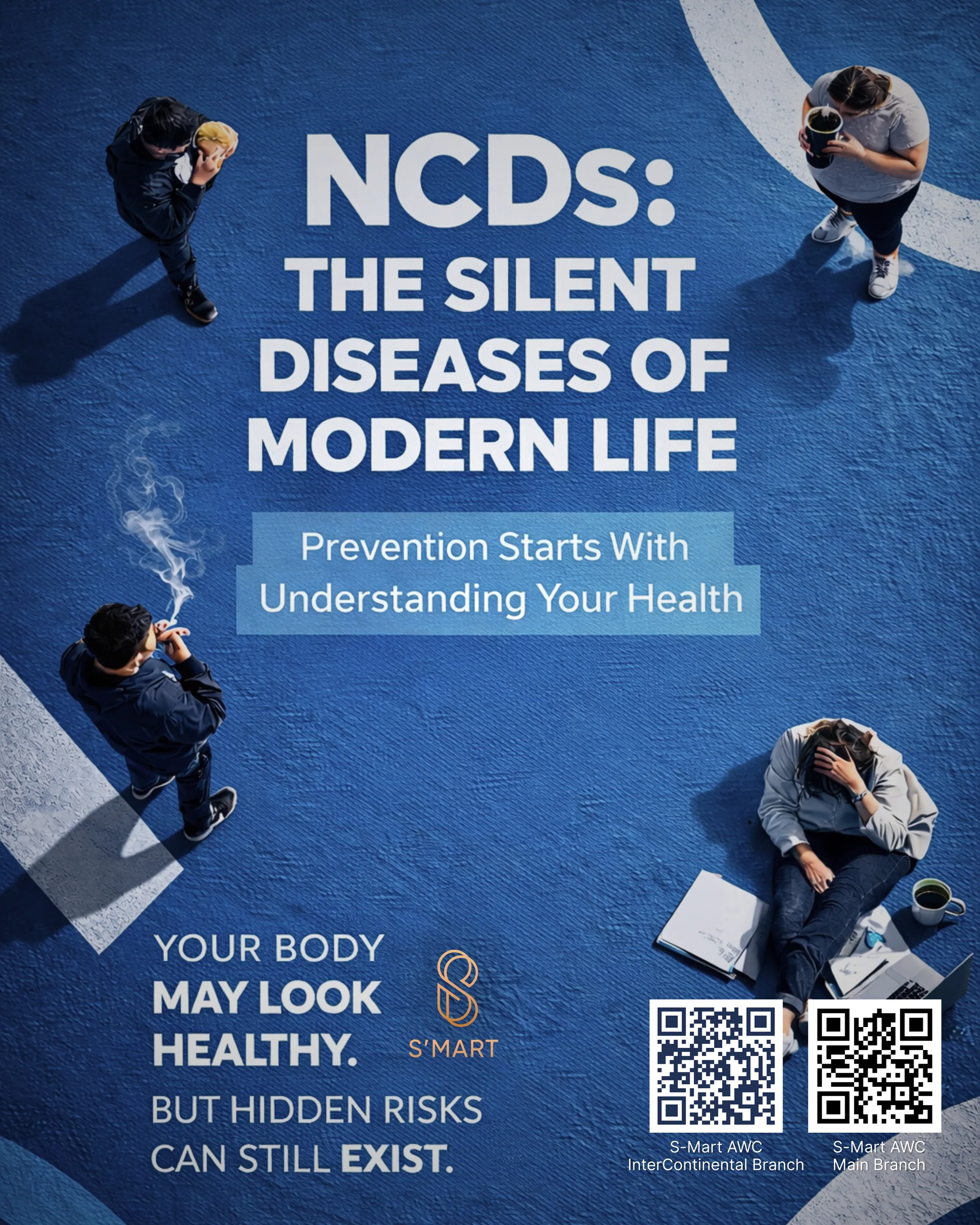
Longevity & Health Insight · 11 Mar 2026
What Are NCDs? Risk Behaviors and Health Screenings You Should Know
Non-Communicable Diseases (NCDs) are silent health threats often caused by long-term lifestyle habits such as poor diet, lack of exercise, and chronic stress. This article helps you identify common risk behaviours and highlights important health screening tests that can detect potential diseases early.
What are NCDs? Check Your Risk Behaviors and Key Health Screenings You Shouldn’t Miss
Working-age individuals often carry many responsibilities and tend to devote most of their time to family and work, sometimes forgetting to take care of themselves. Did you know that NCDs (Non-Communicable Diseases) are silent threats that gradually damage your health over time? This article will help you assess your risk factors and introduce important health screening tests that can detect diseases early.
What diseases are included in NCDs?
These diseases are not caused by infections, but mainly result from long-term lifestyle behaviors. Common NCDs include:
- Diabetes
- Hypertension (High Blood Pressure)
- Cardiovascular Diseases
- Obesity
- Certain Types of Cancer
Quick Check! Risk Behaviors You May Be Doing Every Day
Eating foods that are very sweet, fatty, salty, or strongly flavored
Lack of exercise and sitting in the same position for long periods
Regular alcohol consumption and smoking
Chronic stress and insufficient sleep
Don’t Wait Until It’s Too Late! What Should Be Checked in an Annual
Health Checkup to Prevent NCDs?
A regular health checkup is one of the best ways to prevent serious diseases. Here are important blood tests that can help accurately screen the risk of NCDs:
Diabetes Screening (Diabetes Profile)
- Fasting Blood Sugar (FBS)
- HbA1c (Hemoglobin A1c) to measure long-term blood sugar levels
Blood Lipid Profile
- Cholesterol
- HDL
- LDL
- Triglycerides
Helps prevent arterial blockage and cardiovascular diseases.
Kidney and Liver Function Tests
- BUN
- Creatinine
- Uric Acid (for gout risk)
- Liver Function Tests (LFTs)
These organs can deteriorate due to conditions like hypertension and diabetes.
Heart Disease Risk (Cardiac Markers)
Tests for deeper cardiovascular inflammation, such as:
- hs-CRP
- Homocysteine
- Lipoprotein(a)
Cancer Screening (Tumor Markers)
Initial cancer indicators such as:
- AFP
- CEA
- PSA (for men)
Basic Screening
- Complete Blood Count (CBC) to assess blood cell health
- ESR to detect inflammation in the body
Conclusion
NCDs are common but largely preventable. By adjusting lifestyle habits and undergoing regular health checkups, you can detect potential health issues early and reduce long-term risks.
Don’t wait until your body sends warning signals before taking action. Prevention is always better than cure.
Related articles
Related articles


S-MART AWC · 01
Headquarters (Prasert Manukitch)
Address S-Mart AWC Building, 35/2 Soi Prasert Manukitch 29 (Maylab), Prasert Manukitch Road, Chorakhe Bua, Lat Phrao, Bangkok 10230
S-MART AWC · 02
Inter Branch (Phloen Chit–Chidlom)
Address Room G102, Ground Floor, President Tower Shopping Center (connected to Inter Bangkok), 973 Phloen Chit Road, Lumphini, Pathum Wan, Bangkok 10330