
Longevity & Health Insight · 23 Oct 2026
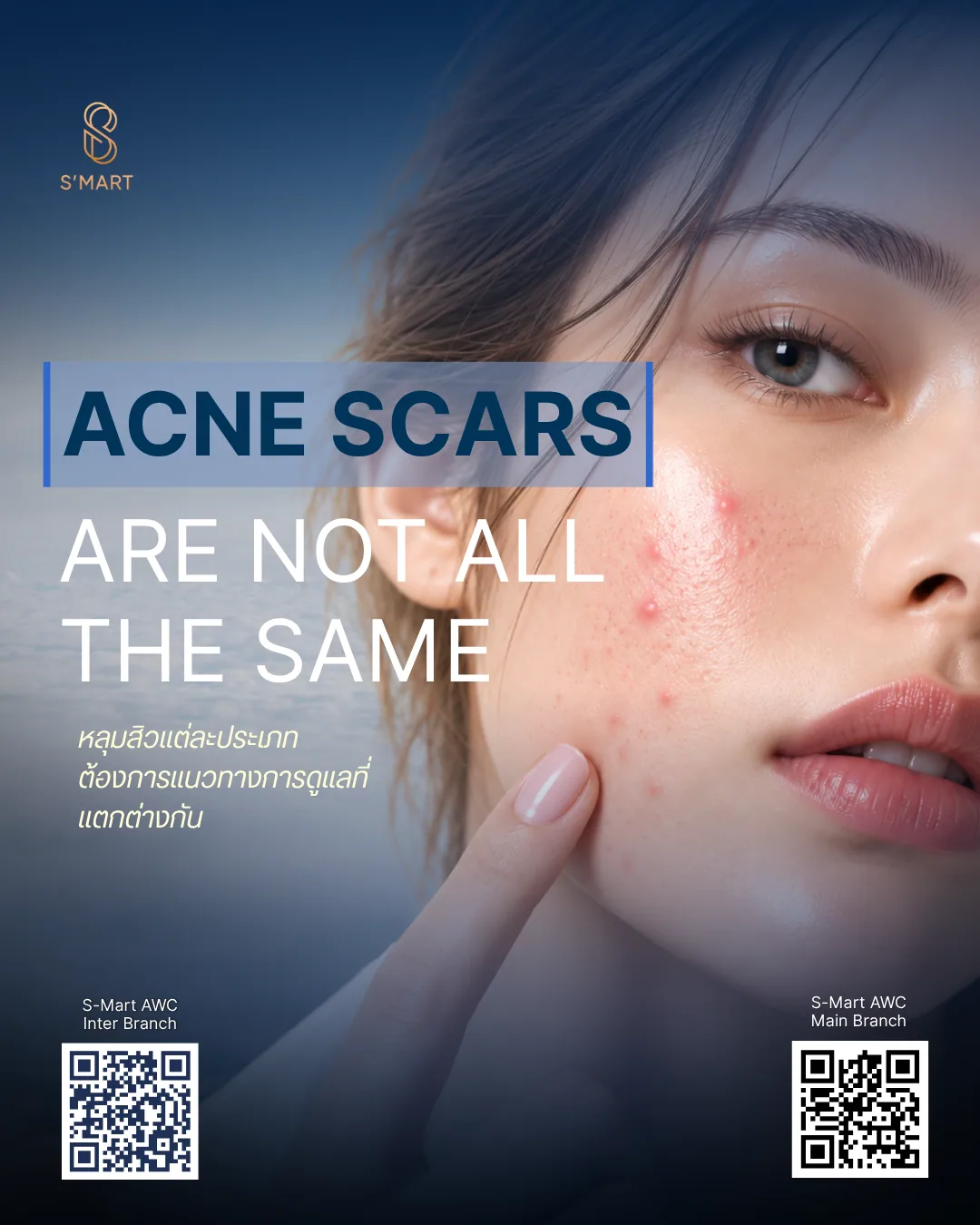
Not All Acne Scars Are the Same: Different Types Require Different Treatment Approaches
Not all acne scars are the same. Ice pick, boxcar, and rolling scars differ in shape, depth, and the treatments they may respond to. Options such as TCA CROSS, fractional laser, radiofrequency microneedling, and subcision may be considered depending on the type of scarring. A professional skin assessment is essential to determine an appropriate treatment plan, as results vary according to scar characteristics and individual skin conditions.
Not All Acne Scars Are the Same: Understanding Different Types and Treatment Options
Acne scars can remain on the skin long after active acne has cleared, sometimes affecting a person's confidence and overall skin appearance.
While ordinary skincare products can support skin health, they are generally unable to correct deeper structural changes associated with atrophic acne scars.
For this reason, medical procedures may be considered to help improve the appearance of certain acne scars.
However, one common question is:
“Can every type of acne scar be treated in the same way?”
The answer is no.
Different acne scars have distinct shapes, depths, and underlying characteristics. Understanding these differences is important when selecting an appropriate treatment approach.
3 Types of Acne Scars and Their Treatment Options
- Ice Pick Scars
Ice pick scars are characterised by narrow, deep depressions that extend into the skin.
They often appear as small, sharply defined openings with greater depth beneath the surface.
Because of their narrow shape and depth, these scars can be particularly challenging to treat.
Possible Treatment: TCA CROSS
One treatment that may be considered for selected ice pick scars is TCA CROSS (Chemical Reconstruction of Skin Scars).
This technique involves the careful application of high-concentration trichloroacetic acid (TCA) to individual scars by an appropriately trained medical professional.
How Does It Work?
TCA CROSS creates a controlled chemical injury within the scar.
The resulting healing response may encourage tissue remodelling and collagen production over time, potentially improving the appearance of the depression.
However, several treatment sessions may be required, and outcomes vary.
Possible adverse effects include irritation, post-inflammatory hyperpigmentation, changes in pigmentation, and further scarring.
High-concentration TCA should never be applied at home or used without professional supervision.
- Boxcar Scars
Boxcar scars are depressed scars with relatively well-defined edges.
They may appear round, oval, or rectangular, resembling small depressions with distinct borders.
The depth of these scars can vary, which influences the most appropriate treatment.
Possible Treatment Options
Depending on scar depth and skin characteristics, a dermatologist may consider:
Fractional Laser: Uses controlled energy delivery to promote skin remodelling and may improve scar texture.
Radiofrequency Microneedling (RF Microneedling): Combines microneedles with radiofrequency energy to support collagen remodelling.
Subcision: May be considered when fibrous attachments beneath a scar are contributing to skin tethering.
Not all boxcar scars require subcision.
Some well-defined or deeper boxcar scars may respond better to other procedures or a combination of approaches.
- Rolling Scars
Rolling scars are broad, shallow or moderately deep depressions with smooth, sloping edges.
They often create an uneven or wave-like appearance across the skin.
Some rolling scars develop because fibrous bands beneath the skin pull the surface downwards.
Possible Treatment Options
A dermatologist may consider:
Fractional laser treatment
Radiofrequency microneedling
Subcision for tethered scars
Why Might Subcision Be Useful?
Subcision is a medical procedure used to release fibrous bands beneath selected depressed scars.
When these bands are contributing to the indentation, releasing them may allow the affected skin to become less tethered.
The procedure may improve the appearance of certain rolling scars and some tethered boxcar scars.
However, the response depends on scar anatomy, depth, technique, and individual healing.
Subcision also carries potential risks, including bruising, swelling, bleeding, infection, and unwanted changes to the skin.
It should therefore be performed only after appropriate medical assessment.
Why Shouldn't You Treat Acne Scars Yourself?
A person may have several different types of acne scars on the same area of the face.
For example, ice pick scars may appear alongside boxcar and rolling scars.
This means that no single treatment is necessarily suitable for every scar.
A dermatologist may recommend combination therapy, using different approaches according to each scar's characteristics.
Treatment planning may take into account:
The type and depth of acne scars
Skin type and sensitivity
The presence of active acne
The risk of post-inflammatory pigmentation
Previous treatments
Individual expectations and medical history
Using strong chemical agents or attempting invasive procedures without medical supervision can result in burns, pigmentation problems, infection, or additional scarring.
Professional assessment is therefore an important part of safe acne scar management.
How to Care for Your Skin After Acne Scar Treatment
Appropriate aftercare can help support the skin's natural healing process and reduce certain treatment-related risks.
Specific instructions will depend on the procedure performed.
- Maintain Skin Hydration
Use a gentle moisturiser recommended by your healthcare professional.
Maintaining an appropriate skin barrier and avoiding irritating products may support recovery.
- Protect Your Skin From Sun Exposure
After certain laser or chemical procedures, the skin may be more sensitive to sunlight.
Follow your doctor's instructions regarding sunscreen, sun avoidance, and protective clothing.
Sun protection is particularly important for reducing the risk of post-inflammatory pigmentation changes.
- Avoid Picking or Scratching
If scabs or temporary crusting develop, avoid picking at them.
Allow the skin to heal according to the aftercare guidance provided.
Premature removal of scabs may increase the risk of irritation, infection, or unwanted marks.
- Follow Your Doctor's Aftercare Instructions
Some procedures may require temporary avoidance of exfoliating products, active skincare ingredients, or strenuous activities.
Contact your healthcare provider if you experience worsening pain, spreading redness, unusual discharge, or other concerning symptoms.
Conclusion
Acne scars are not all the same, and different types may require different treatment approaches.
Ice pick scars may be considered for targeted treatments such as TCA CROSS.
Boxcar scars may be treated with procedures such as fractional laser or RF microneedling, depending on their depth and characteristics.
Rolling scars, particularly those with fibrous tethering, may benefit from subcision in appropriately selected cases.
However, treatment suitability and results vary between individuals.
A professional skin assessment is an important first step towards understanding your acne scars and choosing an appropriate treatment plan.
THANABOON PONGSAOWAKON, M.D.
Related articles
Related articles



S-MART AWC · 01
Headquarters (Prasert Manukitch)
Address S-Mart AWC Building, 35/2 Soi Prasert Manukitch 29 (Maylab), Prasert Manukitch Road, Chorakhe Bua, Lat Phrao, Bangkok 10230
S-MART AWC · 02
Inter Branch (Phloen Chit–Chidlom)
Address Room G102, Ground Floor, President Tower Shopping Center (connected to Inter Bangkok), 973 Phloen Chit Road, Lumphini, Pathum Wan, Bangkok 10330