
Longevity & Health Insight · 21 Oct 2026
Healthy-Looking Skin Starts From Within
Healthy-looking skin is supported by more than skincare alone. Balanced nutrition, adequate sleep, and everyday lifestyle habits also play important roles. A nutritious breakfast containing fibre, protein, healthy fats, and complex carbohydrates can be part of a healthy eating pattern. Food sequencing and appropriately planned intermittent fasting may support certain metabolic health goals, although their benefits vary between individuals and do not directly guarantee clearer skin.
Healthy-Looking Skin Starts From Within
Breakfast Habits and Practical Tips for Intermittent Fasting
Everyone wants skin that looks fresh, radiant, and healthy.
Some people invest in expensive skincare products, while others rely on photo filters to feel more confident about their appearance.
However, long-term skin health is influenced by more than external skincare. Nutrition, sleep, hydration, and everyday lifestyle habits also play important roles.
One simple place to begin is by looking at our daily eating habits, including what we choose to eat for breakfast.
This article explores practical ways to plan a nutritious breakfast, consider the order in which foods are eaten, and approach Intermittent Fasting (IF) appropriately.
1. Breakfast: An Opportunity to Start the Day With Good Nutrition
In today's busy world, many people skip breakfast because of work schedules or personal routines.
A nutritious breakfast can provide energy and essential nutrients to support daily activities.
For people who enjoy eating in the morning, making breakfast a balanced meal may be a useful way to establish healthier eating habits.
However, breakfast is not medically essential for every person, and skipping it does not automatically mean that someone is unhealthy.
The overall quality, quantity, and timing of food consumed throughout the day are also important.
Should Breakfast Be the Main Meal?
Some research suggests that consuming a greater proportion of daily energy earlier in the day may benefit certain aspects of metabolic health.
This approach may be particularly relevant for people who tend to eat large meals late at night.
However, the most suitable meal schedule depends on individual health conditions, daily routines, nutritional needs, and personal preferences.
Rather than following a strict rule, the goal should be to establish a sustainable eating pattern that provides adequate nutrition.
2. Food Sequencing: Does the Order of Eating Matter?
Beyond choosing nutritious foods, some research has explored whether food sequencing, or the order in which different food groups are eaten, can influence post-meal blood glucose responses.
One approach involves eating vegetables and protein-rich foods before carbohydrate-rich foods.
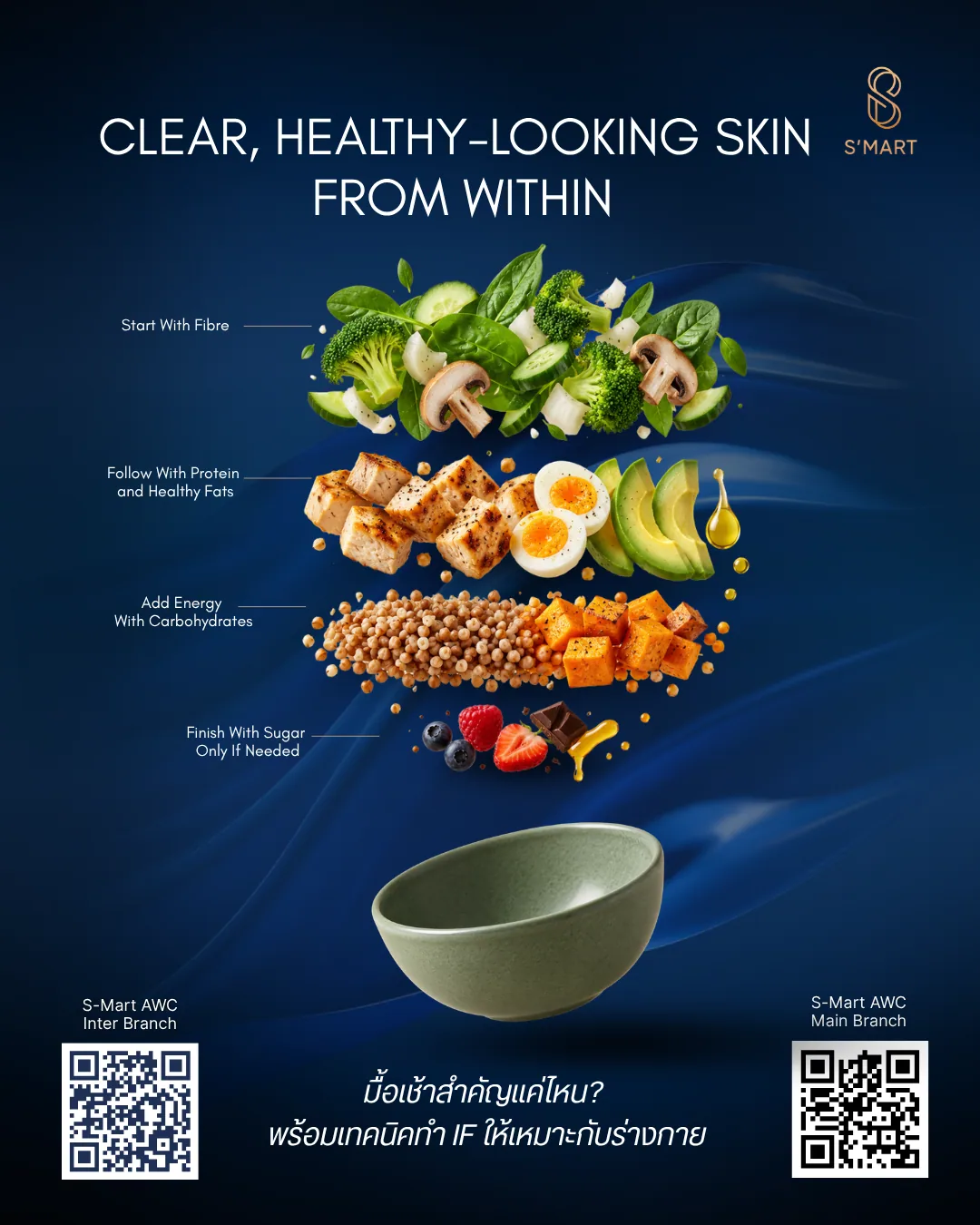
- Step 1: Start With Fibre-Rich Foods
Begin the meal with vegetables or other fibre-rich foods when practical.
Dietary fibre supports digestive health and may help slow the absorption of carbohydrates.
For example, you could start with a small serving of vegetables.
- Step 2: Include Protein and Healthy Fats
Next, include suitable protein sources and healthy fats.
Examples include eggs, tofu, fish, natural yoghurt, nuts, or seeds.
Protein and fat contribute to nutritional balance and may influence the body's response to a meal.
- Step 3: Choose Complex Carbohydrates
Include complex carbohydrates, particularly minimally processed, fibre-rich options.
Examples include:
- Oats
- Brown rice
- Wholegrain bread
- Beans and legumes
These foods provide energy and important nutrients.
- Step 4: Limit Added Sugar and Optional Desserts
If you choose to eat something sweet, consider a modest portion as part of your overall dietary pattern.
However, dessert is not a necessary part of breakfast or any other meal.
Rather than relying on eating sugary foods last to prevent blood glucose changes, it is generally more useful to limit excessive added sugar.
Is Food Sequencing Necessary for Everyone?
Studies have found that eating vegetables and protein before carbohydrates may reduce short-term post-meal glucose rises in certain groups.
However, food sequencing does not replace the importance of food quality, appropriate portions, and overall dietary balance.
It should be viewed as an optional strategy rather than a rule that everyone must follow.
3. How Should You Approach Intermittent Fasting?
Intermittent Fasting (IF) has become a popular dietary approach, particularly among people interested in weight management and metabolic health.
One common method involves limiting food intake to a specific period each day.
Some individuals achieve this by skipping breakfast and eating later.
However, research has also explored the possible benefits of early time-restricted eating, which places the eating window earlier in the day.
Is Eating Breakfast and Having an Earlier Dinner Better?
Some studies suggest that aligning meal timing more closely with the body's circadian rhythm may benefit certain metabolic outcomes, such as blood glucose regulation.
For some people, eating breakfast and avoiding large late-night meals may be a practical approach.
This could involve finishing the last meal earlier in the evening rather than skipping dinner completely.
However, current evidence does not establish that skipping dinner is always better than skipping breakfast for everyone.
What Should People Practising IF Consider?
If you choose to follow intermittent fasting, it is important to:
- Maintain adequate total energy and nutrient intake.
- Choose balanced meals containing protein, vegetables, whole grains, and healthy fats.
- Avoid compensating with excessive food intake during the eating window.
- Select a schedule that supports sleep, work, and daily activities.
- Consider your medical history and any medicines you take.
Intermittent fasting may not be suitable for pregnant or breastfeeding women, people with a history of eating disorders, or individuals taking certain diabetes medications without medical supervision.
Most importantly, there is insufficient evidence to conclude that intermittent fasting directly improves skin clarity in everyone.
Conclusion
Healthy-looking skin is influenced by several factors, including nutrition, sleep, sun protection, and overall health.
Choosing a nutritious breakfast, paying attention to food quality, and planning suitable mealtimes can contribute to a balanced lifestyle.
Food sequencing and intermittent fasting may offer additional benefits for selected individuals, but they are not essential for everyone.
The foundation of long-term wellbeing is a varied, balanced diet and sustainable daily habits rather than strict meal timing rules.
PARINYA ANGSANAN, M.D. , CHUTIYA KIRDSIRI, M.D.
Related articles
Related articles

S-MART AWC · 01
Headquarters (Prasert Manukitch)
Address S-Mart AWC Building, 35/2 Soi Prasert Manukitch 29 (Maylab), Prasert Manukitch Road, Chorakhe Bua, Lat Phrao, Bangkok 10230
S-MART AWC · 02
Inter Branch (Phloen Chit–Chidlom)
Address Room G102, Ground Floor, President Tower Shopping Center (connected to Inter Bangkok), 973 Phloen Chit Road, Lumphini, Pathum Wan, Bangkok 10330