
Longevity & Health Insight · 5 Feb 2026
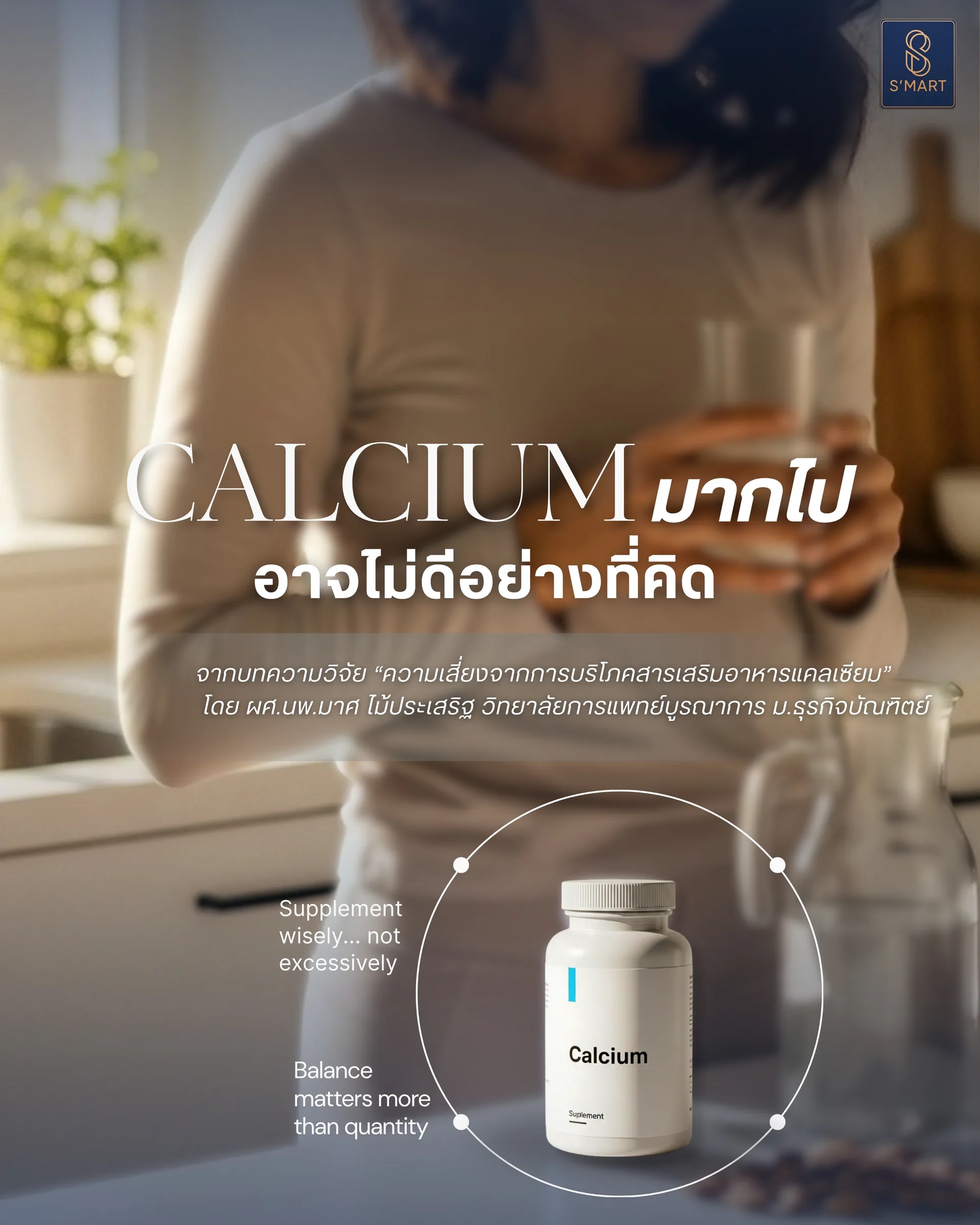
Too Much Calcium… May Not Be as Good as You Think!
Many people believe that osteoporosis is simply a sign of calcium deficiency. However, improper supplementation may actually accelerate bodily degeneration. Research shows that strong bones rely not only on calcium, but also on adequate protein, essential vitamins, and a balanced lifestyle working together.
Think Before You Supplement: When Calcium May Do More Harm Than Good
In today’s health-conscious world, calcium supplements have become one of the most popular choices especially among women over 40 and older adults aiming to prevent osteoporosis.
But here’s the important question:
Are you supporting your bones the right way?
Taking calcium without understanding how bone formation truly works may sometimes cause more harm than benefit.
Calcium Is Not the Only Hero of Bone Health
Research by Asst. Prof. Dr. Mas Maiprasert, College of Integrative Medicine, Dhurakij Pundit University, highlights that strong bones are not built by calcium alone. Bone health depends on the coordinated action of several essential nutrients, including:
- Protein – The primary structural component of bone
- Vitamin C – Supports collagen production, keeping bones flexible and resilient
- Vitamin D – Enhances calcium absorption
- Vitamin K – Helps “lock” calcium into the bones, preventing it from depositing in the wrong places
If the body lacks these nutrients, increasing calcium intake alone will not effectively strengthen bones.
When Calcium Goes to the Wrong Place
Studies suggest that excessively high calcium levels—both inside and outside cells—may lead to unintended consequences:
- Oxidative stress, accelerating cellular aging and cell damage
- Ectopic calcification (calcium buildup in soft tissues), contributing to arterial stiffness, high blood pressure, and increased cardiovascular risk
- Potentially higher risk of certain cancers, including breast and prostate cancer
In other words, too much calcium may accelerate degeneration rather than prevent it.
Osteoporosis Doesn’t Always Mean Calcium Deficiency
In older adults diagnosed with low bone mineral density (BMD), the issue is not always a simple lack of calcium.
Often, it stems from deficiencies in the foundational nutrients required for bone formation such as protein, vitamin C, vitamin D, and vitamin K. Without these, calcium cannot properly bind and integrate into bone tissue.
A Safer and Smarter Approach to Bone Health
For sustainable osteoporosis prevention, research suggests focusing on three key strategies:
1. Promote Bone Formation
- Consume adequate high-quality protein
- Supplement vitamins C, D, and K when needed
- Maintain hormonal balance (e.g., estrogen and testosterone)
2. Reduce Bone Breakdown
- Limit refined sugars, processed carbohydrates, and excessive red meat
- Avoid chronic metabolic acidosis caused by poor dietary patterns or extreme dieting
3. Lower Oxidative Stress
- Get sufficient rest
- Reduce exposure to pollution, smoking, and excessive alcohol
- Increase antioxidants such as glutathione, vitamin E, and Omega-3 fatty acids
- Engage in weight-bearing exercise (brisk walking, jogging, light resistance training), which stimulates bone remodeling
Before Supplementing, Ask: Do You Truly Need It?
Before starting calcium supplements, consider testing your blood calcium levels.
You may also undergo a Coronary Calcium Score assessment to detect abnormal calcium deposits in arteries.
If your body is not deficient, unnecessary supplementation may create an added burden instead of providing benefits.
Bone Health Is About Balance, Not Just Calcium
Osteoporosis is rarely caused by calcium deficiency alone. It often results from an imbalance in the nutrients that allow calcium to function properly.
True bone health comes from restoring balance—through proper nutrition, adequate vitamins, hormonal support, and healthy lifestyle habits.
Because strong bones are built from the inside out.
Research Reference:
Maiprasert, M. (2023). Risks Associated with Calcium Supplement Consumption. Suthiparithat Journal (Special Issue), 248–261. College of Integrative Medicine, Dhurakij Pundit University.
Related articles
Related articles
S-MART AWC · 01
Headquarters (Prasert Manukitch)
Address S-Mart AWC Building, 35/2 Soi Prasert Manukitch 29 (Maylab), Prasert Manukitch Road, Chorakhe Bua, Lat Phrao, Bangkok 10230
S-MART AWC · 02
Inter Branch (Phloen Chit–Chidlom)
Address Room G102, Ground Floor, President Tower Shopping Center (connected to Inter Bangkok), 973 Phloen Chit Road, Lumphini, Pathum Wan, Bangkok 10330