
Longevity & Health Insight · 18 Jul 2026
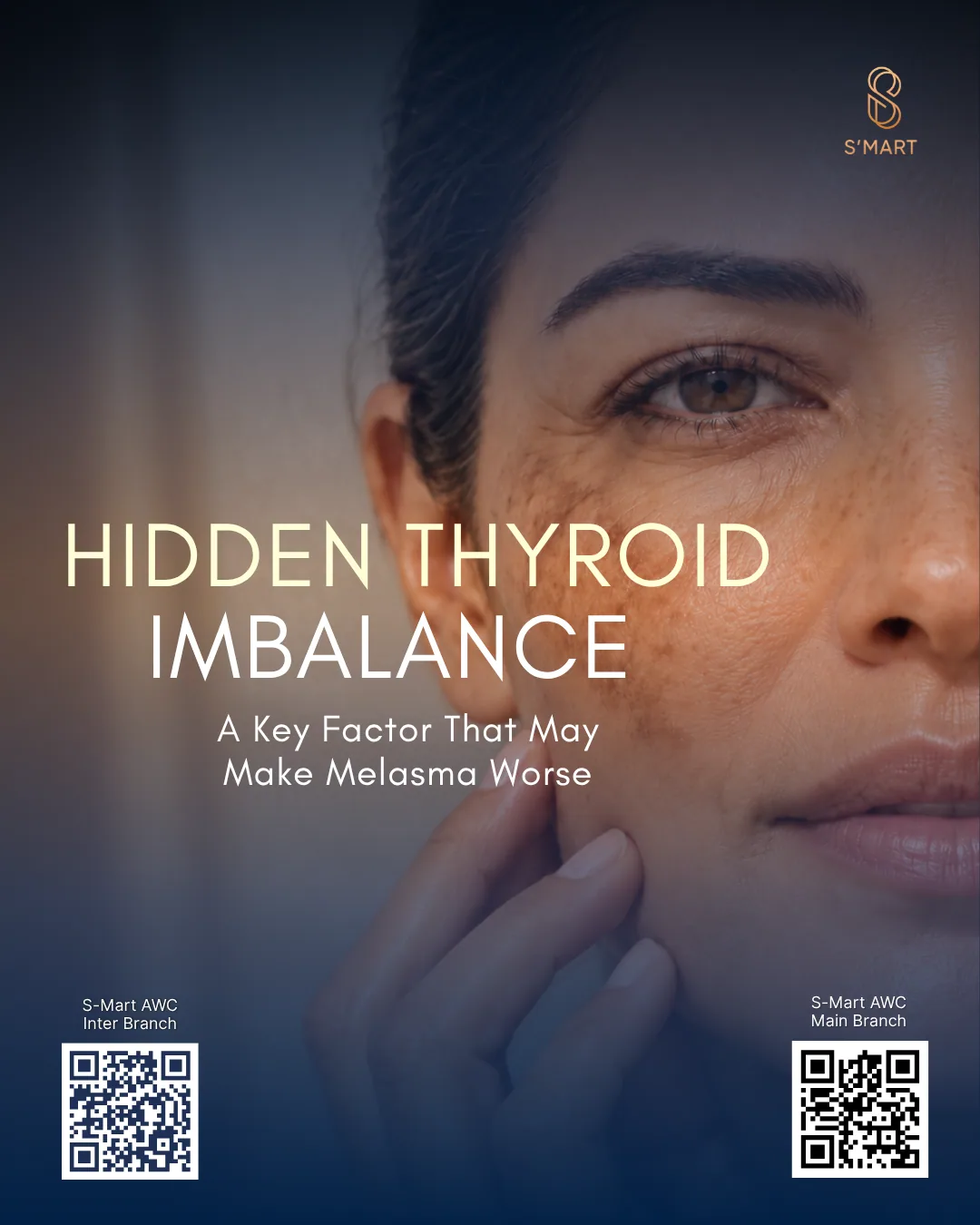
“Hidden Thyroid Imbalance”: A Key Factor That May Make Melasma Worse
Melasma may not be caused by sunlight or hormones alone. A 2025 study found a link between melasma severity and elevated Anti-TPO antibodies, a marker of thyroid autoimmunity. Even without obvious thyroid symptoms, internal assessment may help guide a more targeted approach to managing persistent melasma.
“Hidden Thyroid Imbalance”: A Key Factor That May Make Melasma Worse
Are you someone whose melasma does not seem to fade no matter how much you treat it? You may have tried topical creams or laser treatments, yet the dark patches still remain a concern. New information from dermatology research in 2025 may offer the answer you have been looking for, as researchers have found an interesting link between melasma and the immune system of the thyroid gland. This may be an important hidden key that is often overlooked.
The Starting Point: Melasma Is Not Caused by Sunlight Alone
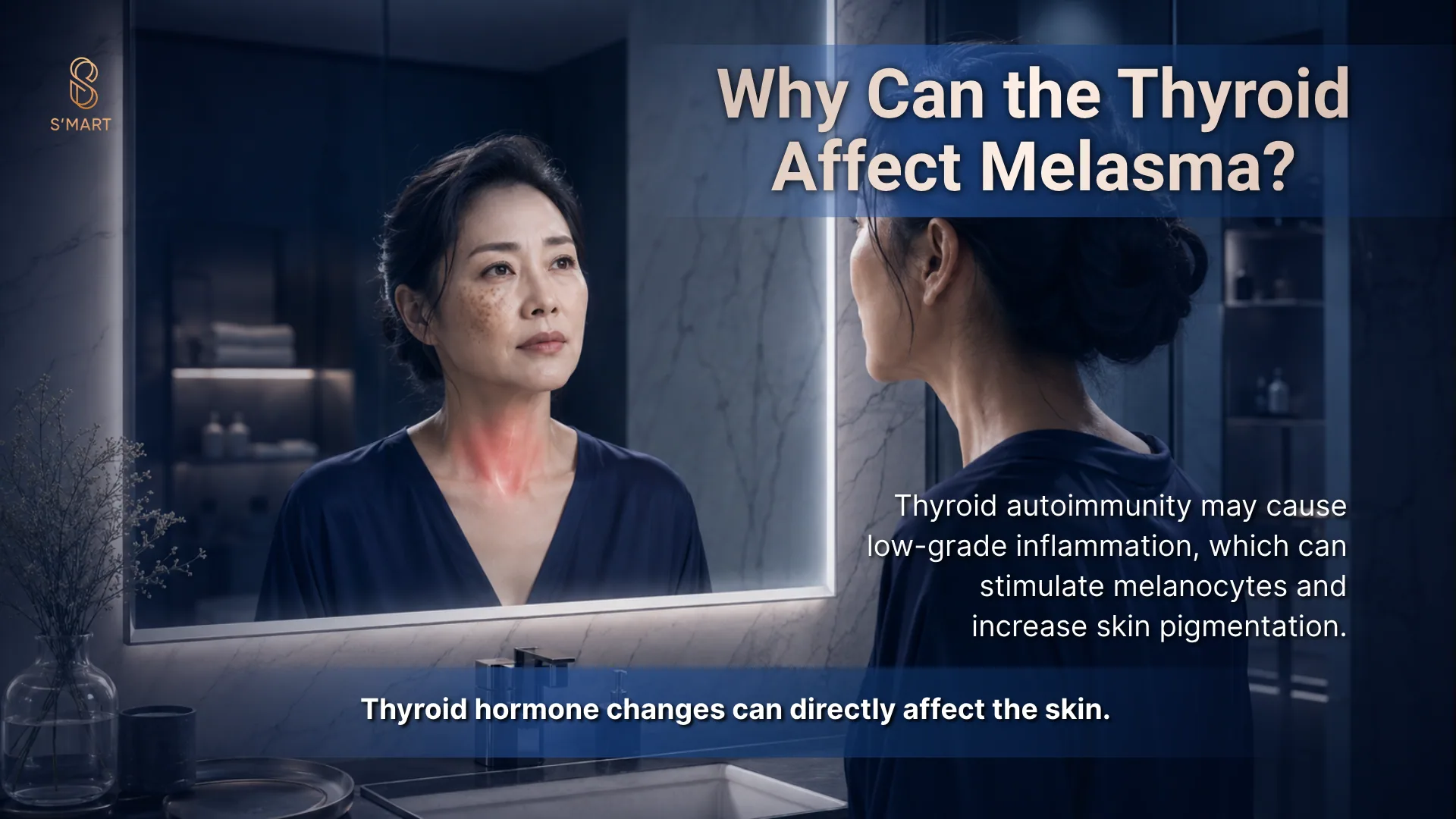
We already know that melasma can be caused by several factors, including genetics, hormones, and ultraviolet light. However, recent research has begun to focus on the role of autoimmunity, especially immune activity related to the thyroid gland, as a possible trigger for abnormal pigmentation.
New Discovery: High Anti-TPO Levels Are Linked to More Severe Melasma
A study by Al-Ansare and Khine (2025) examined 100 women, comparing women with melasma with healthy individuals. The findings revealed several important points:
- Higher antibody levels in people with melasma: Women with melasma had significantly higher blood levels of Anti-TPO antibodies, which are markers of thyroid autoimmunity, compared with healthy individuals.
- The higher the Anti-TPO level, the more severe the melasma: Among those with melasma, Anti-TPO levels were directly associated with melasma severity, measured by the modified Melasma Area and Severity Index, or mMASI score. This means that the higher the antibody level, the more likely melasma may appear darker and more widespread.
- A hidden condition that may not be visible: Interestingly, most patients had not been diagnosed with clear overt thyroid dysfunction. However, a hidden or subclinical elevation of Anti-TPO antibodies may still be enough to influence melasma severity.
Who Should Be Especially Careful?
According to the study, groups in which this association was most clearly observed include:
- People of increasing age: Melasma severity and Anti-TPO levels tend to increase with age, especially among those aged 41–50.
- People whose melasma does not improve with treatment: If you already take good care of your skin and avoid sun exposure, but your melasma remains moderate to severe, internal factors may be involved.
Recommendation: Test Before Treatment for Better Results
If you are dealing with chronic melasma, this research suggests a new approach to self-care:
- Consider blood testing: Testing for Anti-TPO antibodies may be useful in assessing possible causes of melasma, especially in difficult-to-treat cases.
- Use a holistic treatment approach: If thyroid autoimmunity is found, working together with a specialist may help improve the response to melasma treatments such as topical medication or laser therapy.
Conclusion
Melasma may be more than a cosmetic concern. It may be a signal from the body. A 2025 study suggests that thyroid autoimmunity, particularly Anti-TPO antibodies, is associated with melasma severity.
Understanding the true underlying cause can help you and your doctor plan a more targeted treatment strategy for clearer-looking skin and better health from the inside out.
Al-Ansare, N. J. H., & Khine, T. H. (2025). The relationship between melasma and thyroid dysfunction-analyzing anti-thyroid peroxidase antibody profiles: An immuno-dermatological perspective. Al-Rafidain Journal of Medical Sciences, 9(2), 290–295. https://doi.org/10.54133/ajms.v9i2.2558
Related articles
Related articles


S-MART AWC · 01
Headquarters (Prasert Manukitch)
Address S-Mart AWC Building, 35/2 Soi Prasert Manukitch 29 (Maylab), Prasert Manukitch Road, Chorakhe Bua, Lat Phrao, Bangkok 10230
S-MART AWC · 02
Inter Branch (Phloen Chit–Chidlom)
Address Room G102, Ground Floor, President Tower Shopping Center (connected to Inter Bangkok), 973 Phloen Chit Road, Lumphini, Pathum Wan, Bangkok 10330