
Longevity & Health Insight · 24 Aug 2026
Understanding Cardiovascular Risk and Prevention
Cardiovascular disease is a major health concern associated with multiple risk factors, including hypertension, diabetes, high blood lipids, obesity, smoking, stress, and air pollution. Preventive care, including regular health check-ups, dietary adjustment, exercise, weight control, and proper management of underlying conditions under medical guidance, may help reduce long-term cardiovascular risk.
A Holistic Approach to Health Care
Cardiovascular diseases, or CVDs, are a major global health concern. Understanding how these diseases develop, recognising risk factors, and making appropriate lifestyle adjustments may help reduce the long-term risk of abnormalities affecting the heart and blood vessels.
Understanding Narrowed Blood Vessels and Ruptured Blood Vessels
The key mechanisms that lead to vascular health problems are often divided into two main categories:
Narrowed or Blocked Blood Vessels
Atherosclerosis is a major cause of narrowed arteries. It is the starting point for several conditions, including coronary artery disease, acute ischaemic heart disease, ischaemic stroke, and peripheral artery disease, which often affects the legs.
Ruptured Blood Vessels and Bleeding Risk
High blood pressure is an important factor that may lead to haemorrhagic stroke. Blood pressure should be controlled within an appropriate range to help prevent severity and reduce the chance of recurrence.
In addition, taking antiplatelet medication, such as aspirin, for disease prevention in people without clear indications may increase the risk of serious bleeding in organs such as the gastrointestinal tract or brain. Therefore, the decision to use such medication should be made carefully after medical assessment.
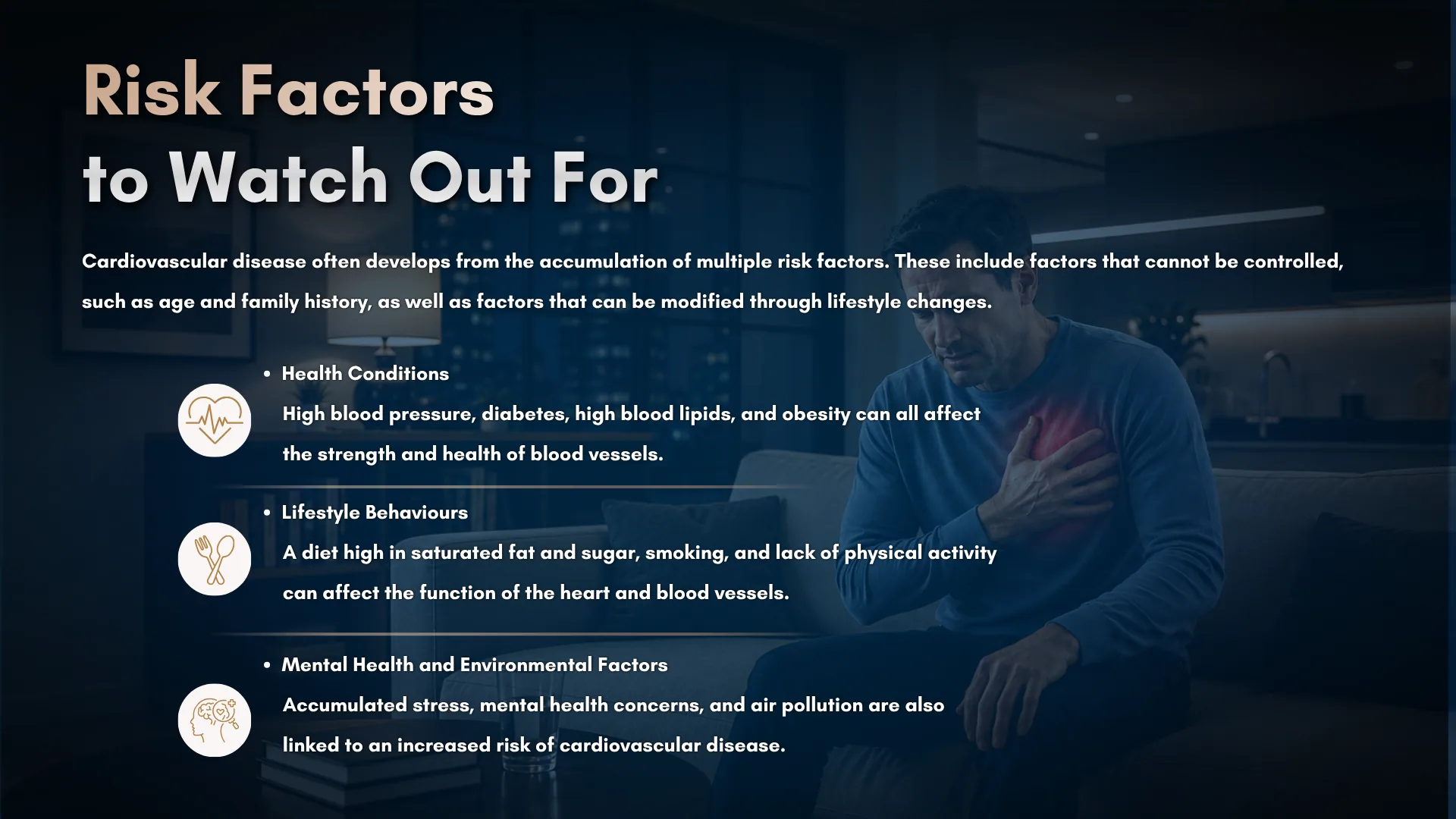
Risk Factors to Watch Out For
Basic Health Care to Reduce Risk (Primary Prevention)
For people with no history of cardiovascular illness, preventive health care is important to reduce the chance of future disease.
Regular Health Check-Ups
Risk should be assessed periodically, including blood pressure measurement and blood tests to check lipid and blood sugar levels.
Lifestyle Adjustment
It is recommended to choose a heart-healthy diet, reduce sugary and fatty foods, avoid smoking, and exercise regularly according to your physical condition.
Weight Control and Mental Health Care
Maintaining a healthy body weight, together with stress management and mental health care, may help reduce overall risk.
Self-Care for People With Existing Risk (Secondary Prevention)
For people with a medical history or high cardiovascular risk, continuous self-care can help manage disease status and reduce the chance of complications.
Managing Coexisting Conditions
People with diabetes, high blood pressure, or chronic kidney disease should follow medical advice regularly and consistently.
Taking Medication Appropriately
Medication used to control blood lipids, blood pressure, and blood sugar should be taken under medical supervision. The doctor will adjust the care plan and consider the balance between benefits and bleeding risks according to each person’s health condition.
Cardiac Rehabilitation
Cardiac Rehabilitation is a comprehensive care programme that includes appropriate exercise, nutritional education, and psychological support to help improve overall health.
Continuous Follow-Up
Medical appointments should be attended regularly to assess health, monitor symptoms, and receive additional self-care guidance.
Taking care of the heart and blood vessels begins with daily lifestyle adjustment and regular health check-ups. If you have questions about your risk or health care plan, you should consult a doctor or qualified medical professional for advice that is suitable for your individual health condition.
Reference
AlRahimi, J. S., Al Saif, S. M., Hussain-Alkhateeb, L., Albarrati, A. M., Alshammeri, O. M., Alghamdi, T. S., Al Faraidy, K. A., Al-Qunaibet, A. M., Alnaji, N. A., Alfawaz, R. A., Alharbi, W. M., AlHabeeb, W. A., Alnouri, F. M., & Tash, A. A. (2026). Clinical Practice Guidelines National Heart Center/Saudi Heart Association 2025 Guidelines for Cardiovascular Diseases Prevention and Risk Assessment. Saudi Medical Journal, 47(1), 120–177. https://doi.org/10.15537/smj.2026.47.1.20250578
Related articles
Related articles


S-MART AWC · 01
Headquarters (Prasert Manukitch)
Address S-Mart AWC Building, 35/2 Soi Prasert Manukitch 29 (Maylab), Prasert Manukitch Road, Chorakhe Bua, Lat Phrao, Bangkok 10230
S-MART AWC · 02
Inter Branch (Phloen Chit–Chidlom)
Address Room G102, Ground Floor, President Tower Shopping Center (connected to Inter Bangkok), 973 Phloen Chit Road, Lumphini, Pathum Wan, Bangkok 10330