
Longevity & Health Insight · 12 Feb 2026
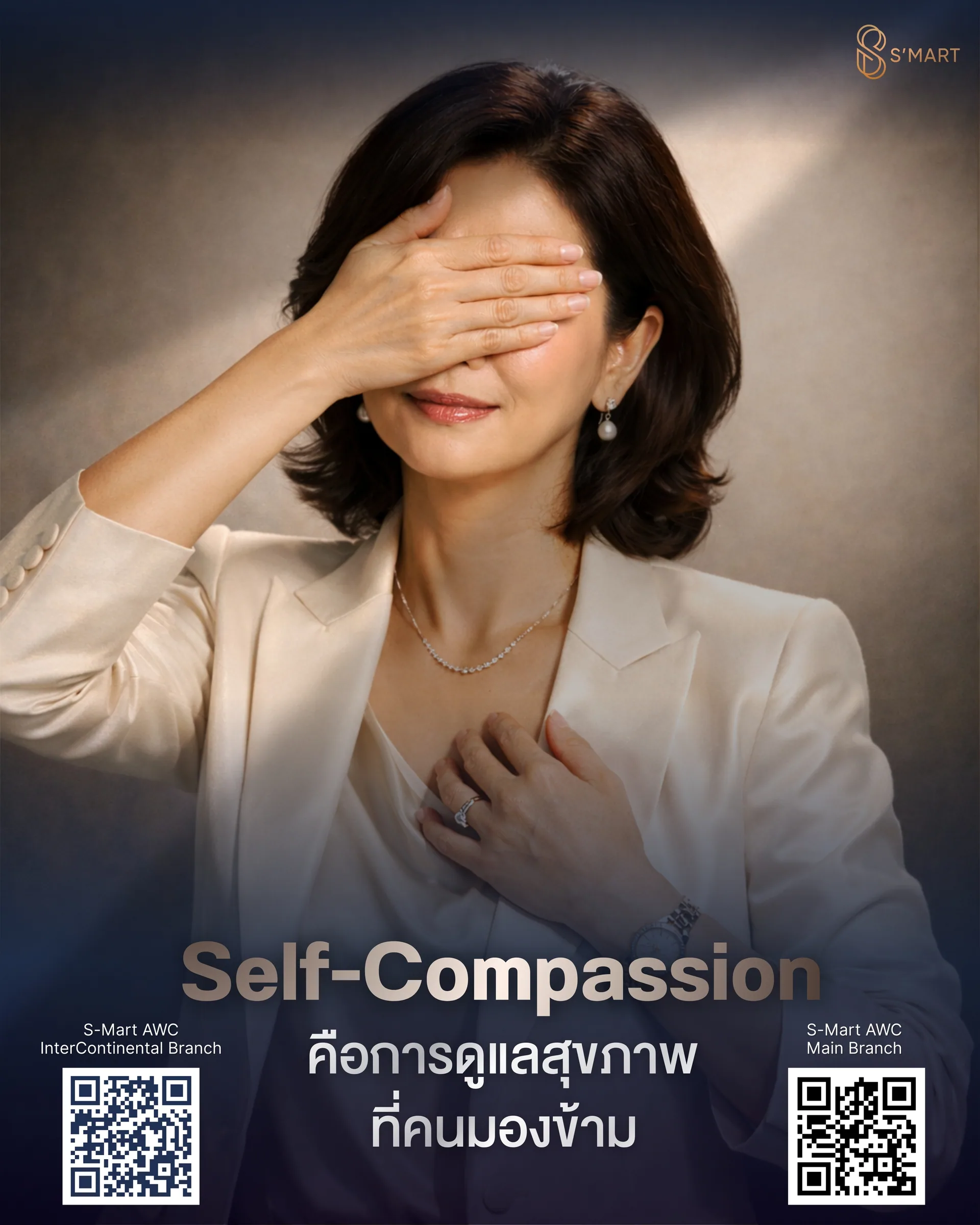
Self-compassion can truly reduce stress-related inflammation
Self-compassion is not only emotionally healing but also biologically protective. Research shows that individuals with higher levels of self-compassion exhibit lower inflammatory responses of interleukin-6 (IL-6) when exposed to stress and recover more quickly. By reducing self-criticism after setbacks, self-compassion acts as a protective shield that lowers cellular stress and decreases the long-term risk of chronic diseases.
Self-compassion can truly reduce stress-related inflammation
Have you ever noticed that when you make a mistake or face pressure, you often become your own worst critic? You may repeatedly blame yourself or feel ashamed. However, recent scientific research reveals a remarkable truth: self-compassion is not merely about feeling emotionally better—it acts as a biological shield that helps reduce inflammation in the body when we encounter stress.
Stress affects the body more deeply than we realize
When we experience psychosocial stress—such as being criticized, engaging in conflict, or speaking in public—the body responds as if it were injured. This activates the immune system to release inflammatory substances, one of which is interleukin-6 (IL-6).
What is Interleukin-6 (IL-6)?
IL-6 is a pro-inflammatory cytokine, a type of protein that plays a key role in triggering inflammation. While inflammation is essential for wound healing, excessive or chronic inflammation increases the risk of serious diseases, including cardiovascular disease, cancer, and Alzheimer’s disease.
Research confirms that self-compassion heals both mind and body
A study published in Brain, Behavior, and Immunity by Juliana Breines and colleagues examined healthy adolescents and young adults. Participants underwent the Trier Social Stress Test—public speaking and rapid mental arithmetic—over two consecutive days, while their IL-6 levels were measured through blood samples.
Key findings
- Protective effect on Day 1: Individuals with high self-compassion showed significantly lower IL-6 responses when exposed to stress on the first day.
- Faster recovery: On Day 2, although self-compassion did not fully prevent stress responses, individuals with low self-compassion exhibited higher baseline inflammation, indicating slower recovery and lingering stress effects.
Why does self-compassion work?
Researchers explain that self-compassion functions similarly to social support—except it is support we provide to ourselves. By avoiding harsh self-judgment after mistakes, we reduce feelings of self-threat, a major trigger of stress and inflammation. Unlike self-esteem, self-compassion does not depend on comparing oneself to others but involves accepting human imperfections with understanding.
How to practice self-compassion for better health
- Stop self-criticism: Replace harsh inner dialogue with supportive words, as you would speak to a close friend.
- Recognize common humanity: Understand that mistakes and failures are part of being human.
- Practice mindfulness: Acknowledge painful emotions without suppressing or over-identifying with them.
Practicing self-compassion is not a sign of weakness—it is a smart health strategy. By reducing cellular-level stress, it helps protect against chronic diseases in the long term.
Based on research evidence
Breines, J. G., Thoma, M. V., Gianferante, D., Hanlin, L., Chen, X., & Rohleder, N. (2014). Self-compassion as a predictor of interleukin-6 response to acute psychosocial stress. Brain, Behavior, and Immunity, 37, 109–114. https://doi.org/10.1016/j.bbi.2013.11.006
Related articles
Related articles

S-MART AWC · 01
Headquarters (Prasert Manukitch)
Address S-Mart AWC Building, 35/2 Soi Prasert Manukitch 29 (Maylab), Prasert Manukitch Road, Chorakhe Bua, Lat Phrao, Bangkok 10230
S-MART AWC · 02
Inter Branch (Phloen Chit–Chidlom)
Address Room G102, Ground Floor, President Tower Shopping Center (connected to Inter Bangkok), 973 Phloen Chit Road, Lumphini, Pathum Wan, Bangkok 10330