
Longevity & Health Insight · 5 Feb 2026
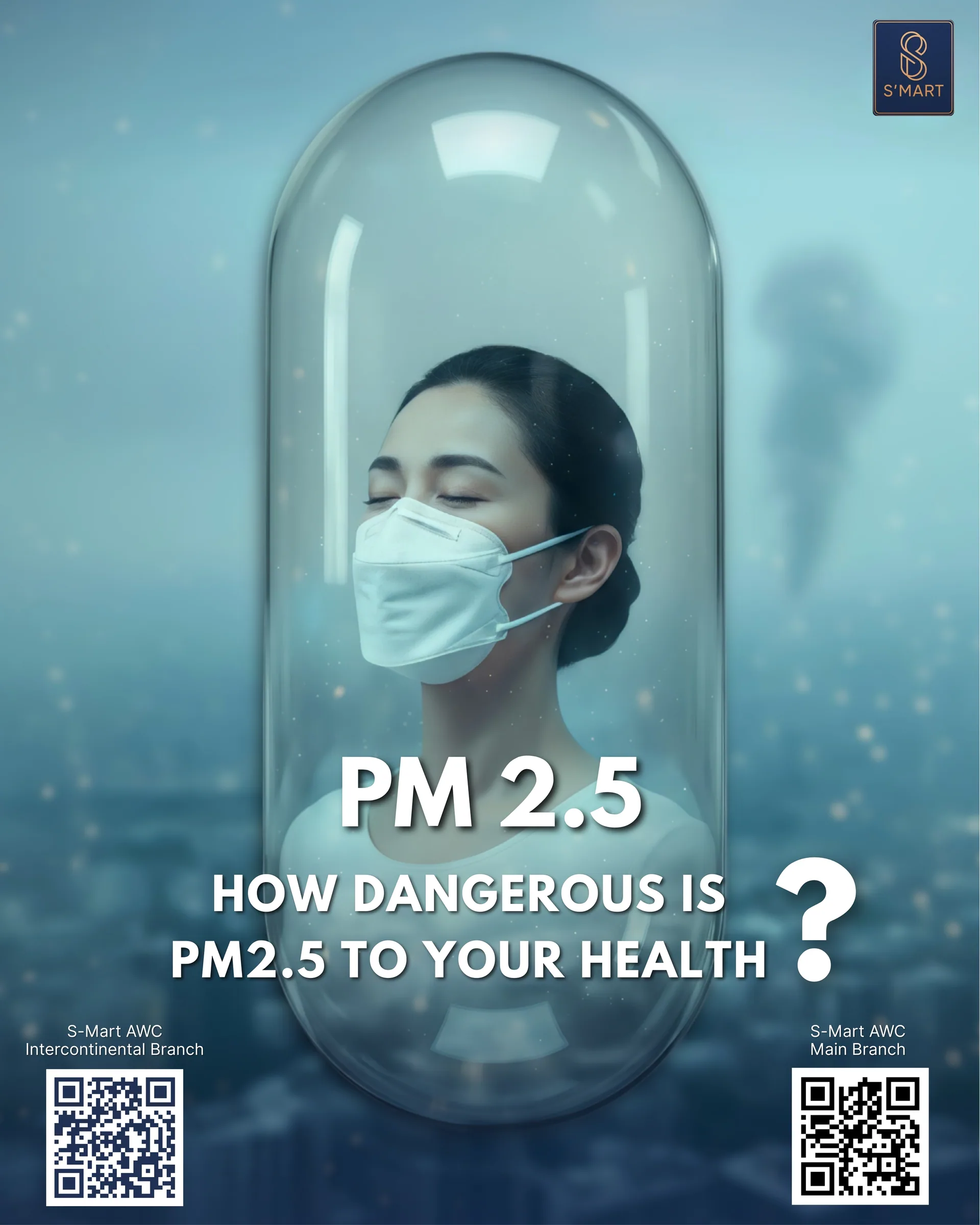
PM2.5: Smaller Than You See… More Harmful Than You Think
PM2.5 may be too tiny to see, but its impact on your body is far greater than you imagine. Global research confirms that even exposure below official safety standards can significantly increase the risk of premature death. These microscopic particles can enter your bloodstream, silently affecting your heart, lungs, and blood vessels every single day. Prevention must begin now before the damage quietly builds up beyond repair. Read on to understand what science is revealing about this invisible threat.
PM2.5: Smaller Than You See More Dangerous Than You Think
We hear about PM2.5 air pollution every year. But what many people don’t realize is this:
The danger doesn’t stop at the lungs.
And you don’t have to live in a heavily polluted area to be at risk.
A large global review covering more than 107 studies worldwide confirms a consistent finding:
Even long-term exposure to low levels of PM2.5 increases the risk of premature death.
This is why fine particulate matter is now widely recognized as a global silent threat.
Why Is PM2.5 So Dangerous?
Because it is incredibly small about 30 times smaller than a human hair.
Its microscopic size allows it to:
- Bypass the body’s natural air filters
- Penetrate deep into the lungs
- Enter the bloodstream
- Travel to the heart, brain, kidneys, and blood vessels
Once it enters the circulation, the body is essentially exposed to internal damage often without noticeable symptoms.
PM2.5 and Increased Mortality Risk
Research shows that for every 10 µg/m³ increase in long-term PM2.5 exposure, the risk of death rises significantly:
- +8% increase in all-cause mortality
- +11% increase in cardiovascular deaths
- +9% increase in chronic obstructive pulmonary disease (COPD)
- +17% increase in lung cancer mortality
These numbers reflect the impact of chronic exposure not just days when pollution spikes, but the cumulative effect of what we breathe every day.
The Heart: One of the Hardest-Hit Organs
PM2.5 doesn’t just affect the lungs. It directly impacts the cardiovascular system by:
1.Accelerating arterial stiffness
2.Raising blood pressure
3.ncreasing blood viscosity (making blood thicker)
4.Promoting clot formation
5.Elevating the risk of heart attacks
In other words, PM2.5 is not only a respiratory hazard it is a systemic accelerator of cardiovascular aging and disease.
Even “Safe” Levels May Not Be Safe
One of the most alarming findings is this:
There appears to be no truly safe threshold for PM2.5 exposure.
Even levels below 10 µg/m³ the guideline recommended by the World Health Organization (WHO) have been associated with increased health risks.
This suggests that the body accumulates damage gradually through daily exposure.
The Impact Is Global
Data from Europe, North America, and Asia all show consistent results.
The health effects of PM2.5 do not depend on geography, ethnicity, or region. Fine particulate pollution affects humans universally.
How Can We Protect Ourselves?
While we cannot eliminate exposure completely, we can strengthen our defenses:
- Wear high-quality particulate masks (e.g., N95 or equivalent)
- Avoid outdoor exercise on high-pollution days
- Increase intake of antioxidant-rich foods
- Monitor early warning signs such as shortness of breath or unusual fatigue
- Consider regular cardiovascular health screenings if living in high-exposure areas
The key message from research is clear:
Prevention must begin early—before cumulative damage becomes irreversible.
The Silent, Daily Impact
PM2.5 may not harm you dramatically in a single day.
But it affects you gradually—every single day you breathe.
And the longer the exposure, the greater the long-term impact.
Research Reference
Chen, J., & Hoek, G. (2020). Long-term exposure to PM₂.₅ and PM₁₀ and all-cause and cause-specific mortality: A systematic review and meta-analysis. Environment International, 143, 105974. https://doi.org/10.1016/j.envint.2020.105974
Related articles
Related articles

S-MART AWC · 01
Headquarters (Prasert Manukitch)
Address S-Mart AWC Building, 35/2 Soi Prasert Manukitch 29 (Maylab), Prasert Manukitch Road, Chorakhe Bua, Lat Phrao, Bangkok 10230
S-MART AWC · 02
Inter Branch (Phloen Chit–Chidlom)
Address Room G102, Ground Floor, President Tower Shopping Center (connected to Inter Bangkok), 973 Phloen Chit Road, Lumphini, Pathum Wan, Bangkok 10330