
Longevity & Health Insight · 26 Feb 2026
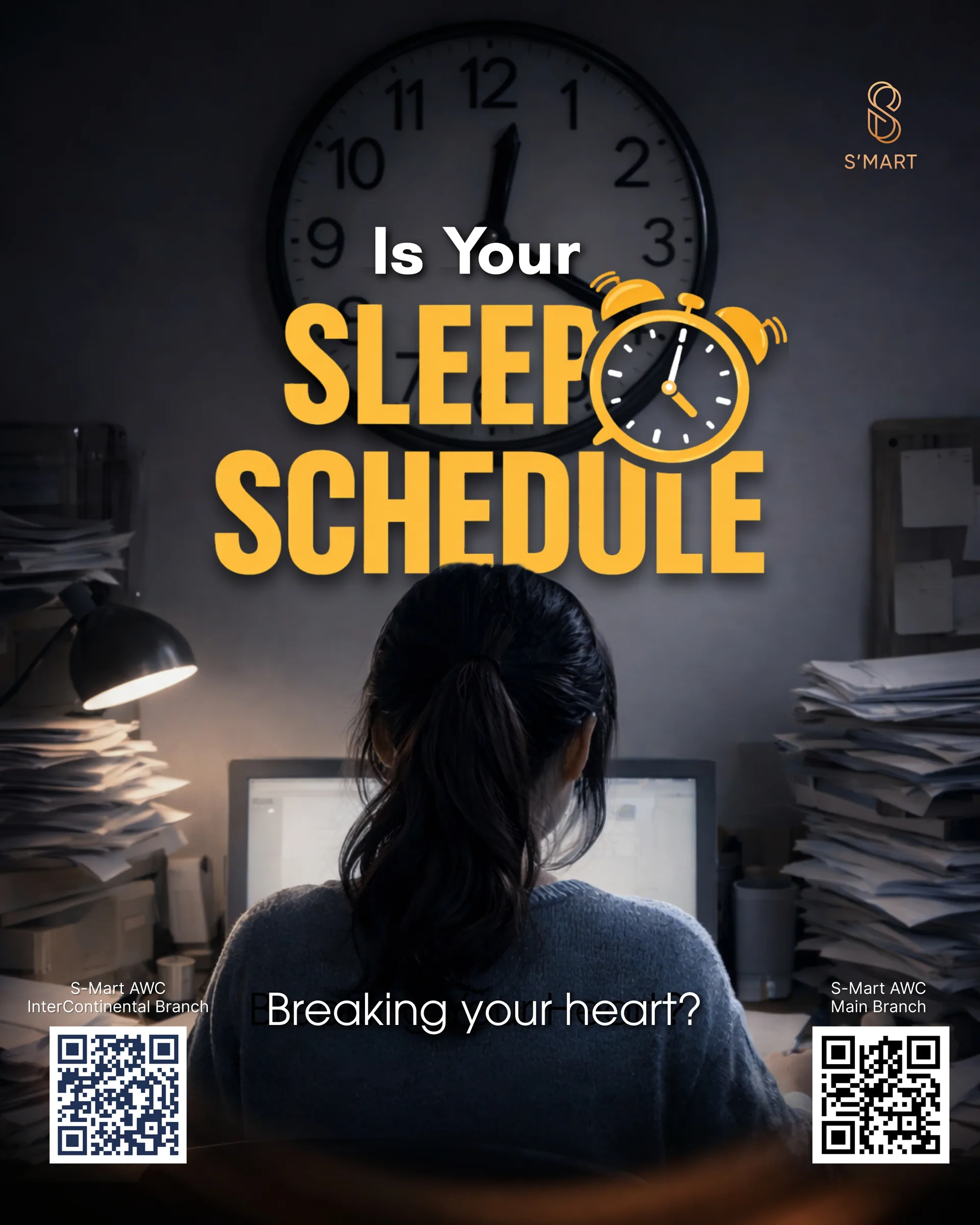
Is Your Sleep Schedule Breaking Your Heart?
Late nights, late meals, and shift work don’t just make you tired they quietly disrupt your biological clock and raise the risk of heart disease. Research in 2025 highlights that timing matters as much as lifestyle habits, revealing a new role of melatonin beyond sleep: protecting the heart and blood vessels. Adjusting light exposure, eating time, and sleep schedules may be one of the most sustainable strategies for long-term cardiovascular health.
Is Your Sleep Schedule Breaking Your Heart?
Have you ever noticed how quickly your health declines during periods of sleep deprivation, night shifts, or frequent late-night meals? The issue may not only be what you’re doing but when you’re doing it.
Emerging research in 2025 confirms that circadian rhythm disruption a misalignment of your internal biological clock is a major risk factor for cardiovascular disease (CVD) and hypertension.
Let’s explore how your body clock affects your heart and why melatonin is far more than just a sleep aid.
What Is the Circadian Rhythm and Why Does It Matter?
Your circadian rhythm is a 24-hour biological timing system regulating sleep–wake cycles, hormone secretion, body temperature, blood pressure, and metabolic activity.
At the center of this system is the suprachiasmatic nucleus (SCN) in the hypothalamus the master clock that synchronizes peripheral clocks in organs like the heart, liver, and pancreas.
When aligned properly:
- Blood pressure naturally dips at night (“nocturnal dipping”)
- Heart rate slows
- Vascular repair processes activate
When disrupted:
- Blood pressure remains elevated overnight
- Sympathetic nervous system activity increases
- Metabolic and inflammatory pathways become dysregulated
Over time, this misalignment significantly increases cardiovascular risk.
Three Modern Habits That Damage Your Body Clock
- Shift Work
Irregular or overnight work schedules desynchronize sleep cycles from internal biological rhythms.
Data suggest:
- Every 5 years of persistent night shift work increases cardiovascular risk by approximately 5–7%.
- Stroke risk may increase by around 4%.
- Artificial Light at Night (ALAN)
Blue light from phones, screens, and city lighting suppresses melatonin production and disrupts darkness signaling to the brain.
Consequences include:
- Elevated nighttime blood pressure
- Increased resting heart rate
- Reduced vascular recovery
- Mistimed Eating
Late-night eating desynchronizes metabolic clocks in the liver and pancreas from the brain’s master clock.
This contributes to:
- Insulin resistance
- Elevated blood glucose
- Weight gain
- Increased long-term heart disease risk
Melatonin: More Than a Sleep Hormone
Melatonin is widely known for regulating sleep but its cardiovascular role is profound.
Research identifies melatonin as cardioprotective through multiple mechanisms:
- Powerful antioxidant action
Melatonin directly neutralizes reactive oxygen species (ROS) and stimulates endogenous antioxidant enzymes protecting vascular cells from oxidative damage.
- Anti-inflammatory effects
It suppresses inflammatory signaling pathways involved in atherosclerosis (plaque buildup).
- Blood pressure regulation
Nighttime melatonin supports healthy autonomic balance by reducing sympathetic overactivity and promoting nocturnal blood pressure dipping.
In essence, melatonin acts as a nighttime guardian of vascular health.
Chronotherapy: Healing Through Timing
Beyond medication, restoring circadian alignment is a powerful preventive strategy.
- Time-Restricted Eating (TRE)
Limiting food intake to an 8–12 hour window (e.g., 8 AM–6 PM) helps resynchronize metabolic clocks, improve blood pressure, and support weight regulation without strict calorie counting.
- Light Hygiene
Reduce blue light exposure 1–2 hours before bedtime. Keep the bedroom dark to support natural melatonin release.
- Targeted Melatonin Supplementation
For individuals with disrupted circadian rhythms, controlled-release melatonin taken 1–2 hours before bedtime may help restore nocturnal blood pressure patterns. Medical guidance is recommended.
Conclusion
Heart health is not determined solely by diet and exercise it is deeply influenced by timing.
Protecting your circadian rhythm, minimizing nighttime light exposure, avoiding late meals, and supporting natural melatonin production may be among the most cost-effective long-term strategies for cardiovascular prevention.
Sometimes, the most powerful medicine isn’t just what you take but when your body is allowed to rest.
References
Nuszkiewicz, J., Rzepka, W., Markiel, J., Porzych, M., Woźniak, A., & Szewczyk-Golec, K. (2025). Circadian rhythm disruptions and cardiovascular disease risk: The special role of melatonin. Current Issues in Molecular Biology, 47(8), 664. https://doi.org/10.3390/cimb47080664
Related articles
Related articles

S-MART AWC · 01
Headquarters (Prasert Manukitch)
Address S-Mart AWC Building, 35/2 Soi Prasert Manukitch 29 (Maylab), Prasert Manukitch Road, Chorakhe Bua, Lat Phrao, Bangkok 10230
S-MART AWC · 02
Inter Branch (Phloen Chit–Chidlom)
Address Room G102, Ground Floor, President Tower Shopping Center (connected to Inter Bangkok), 973 Phloen Chit Road, Lumphini, Pathum Wan, Bangkok 10330