
Longevity & Health Insight · 5 Oct 2026
Healthy Living Starts From Within
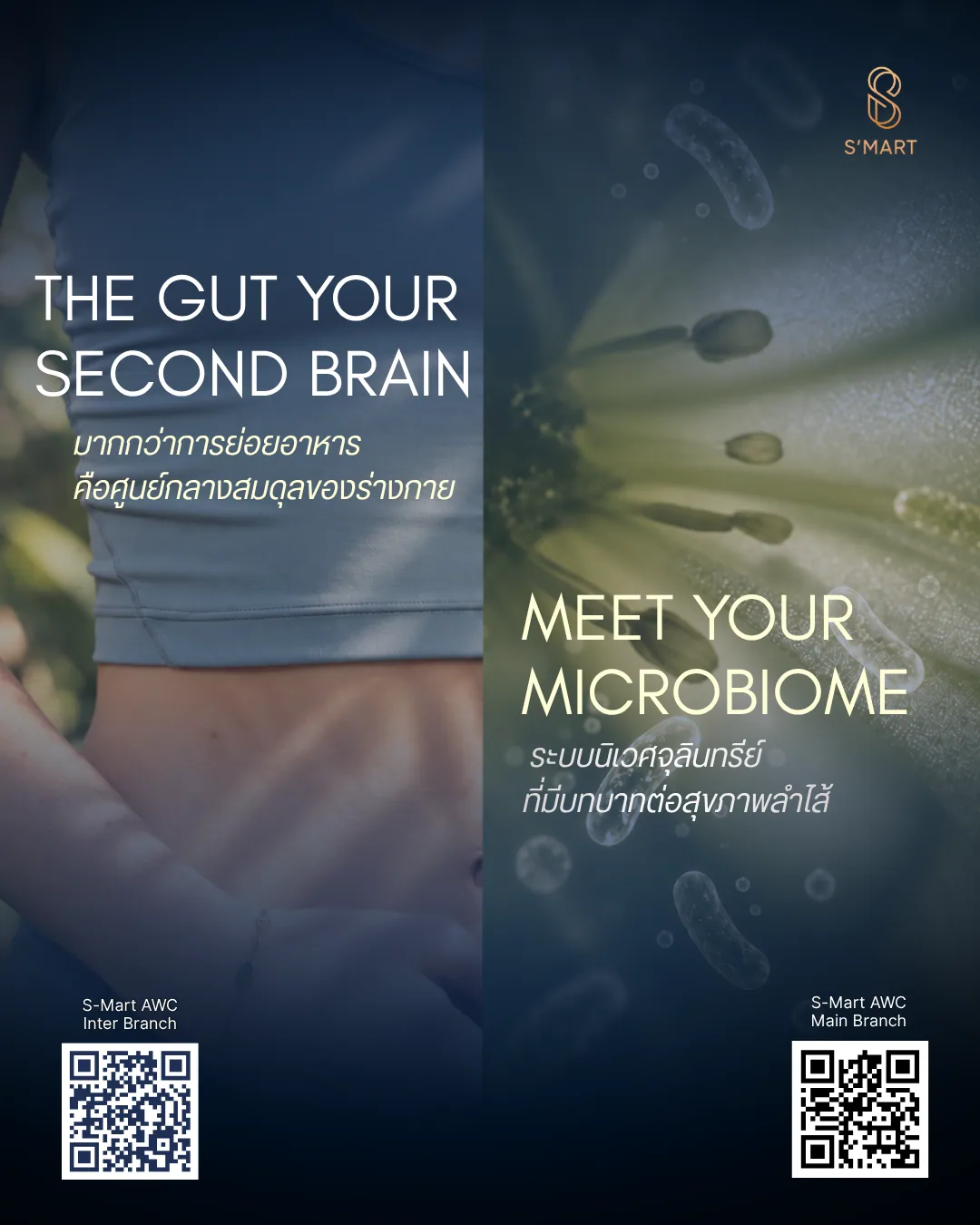
The gut microbiome is an ecosystem of microorganisms in the digestive tract that plays a role in digestion, immunity, metabolism, and communication with other organs through the gut-organ axis. Supporting gut balance through appropriate nutrition, probiotics, prebiotics, synbiotics, and postbiotics may help support long-term overall health.
Healthy Living Starts From Within
Did you know that the gut does much more than digest food and support bowel movements? It is often described as the body’s “second brain”.
Inside the gut lives a vast community of microorganisms known as the Gut Microbiome. These microorganisms have lived alongside us since birth and are considered one of the important factors associated with overall health.
What Is the Gut Microbiome?
The Gut Microbiome is an ecosystem of many different microorganisms that live in the digestive tract.
The composition of these bacteria can change according to age, diet, lifestyle, and environment.
As we age, the gut microbiome may become imbalanced. Scientific research has found that many chronic health conditions are associated with gut imbalance. Supporting a healthy microbiome is therefore becoming an important approach in holistic health care.
The 4 Gut Health Supporters: Probiotics, Prebiotics, Synbiotics, and Postbiotics
To support gut balance, it is helpful to understand four key friendly microorganisms and related compounds.
1. Probiotics
Probiotics are live microorganisms, often known as “good bacteria”.
When consumed in appropriate amounts, they may help support gut balance, immune function, and the control of harmful bacteria.
2. Prebiotics
Prebiotics can be thought of as “quality food” for probiotics.
They are dietary fibres that the human body cannot digest, but beneficial gut bacteria can use as an energy source for growth.
3. Synbiotics
Synbiotics combine probiotics and prebiotics together.
This combination is designed to help good bacteria survive better in the gut and support their function more effectively.
4. Postbiotics
Postbiotics are beneficial substances produced through the metabolic activity of probiotics, or from non-living microbial components.
They may be absorbed and used by the body without requiring live microorganisms to grow first.
The Gut-Organ Axis: How Does the Gut Communicate With Other Organs?
One fascinating aspect of the microbiome is that it does not work only inside the gut. It can also communicate with other organs throughout the body through the nervous system and bloodstream. This is known as the Gut-Organ Axis.
Gut-Brain Axis
The gut and brain communicate with each other in both directions through the Gut-Brain Axis.
Gut imbalance has been studied in relation to neurological and mental health conditions, such as Alzheimer’s disease, Parkinson’s disease, and depression.
Probiotics and prebiotics have also been studied for their potential role in supporting mood, anxiety management, and memory function. However, individual responses may vary, and they should not be considered a direct treatment for these conditions.
Gut-Liver Axis
The gut is connected to the liver through the portal vein.
If the gut barrier becomes weakened, substances from harmful bacteria may pass through and affect the liver. This process has been studied in relation to non-alcoholic fatty liver disease (NAFLD).
Supporting gut health may therefore be one part of caring for liver health.
Gut-Kidney Axis
Some waste substances produced by harmful bacteria, such as TMAO, may enter the bloodstream and may be associated with kidney function.
Choosing a nutritious diet that supports beneficial gut bacteria may be one way to support kidney health as part of overall health care.
Summary
Good health can begin with what is on your plate.
Caring for the Gut Microbiome through regular intake of foods rich in prebiotics and probiotics may help support digestive function and overall health.
It may also play a role in supporting the health of other organs, including the brain, liver, and kidneys.
Start paying attention to the tiny population living inside your gut today, for more sustainable long-term health.
Reference
Kim, Y.-T., & Mills, D. A. (2024). Exploring the gut microbiome: probiotics, prebiotics, synbiotics, and postbiotics as key players in human health and disease improvement. Food Science and Biotechnology, 33, 2065–2080. https://doi.org/10.1007/s10068-024-01620-1
Related articles
Related articles

S-MART AWC · 01
Headquarters (Prasert Manukitch)
Address S-Mart AWC Building, 35/2 Soi Prasert Manukitch 29 (Maylab), Prasert Manukitch Road, Chorakhe Bua, Lat Phrao, Bangkok 10230
S-MART AWC · 02
Inter Branch (Phloen Chit–Chidlom)
Address Room G102, Ground Floor, President Tower Shopping Center (connected to Inter Bangkok), 973 Phloen Chit Road, Lumphini, Pathum Wan, Bangkok 10330