
Longevity & Health Insight · 19 Mar 2026
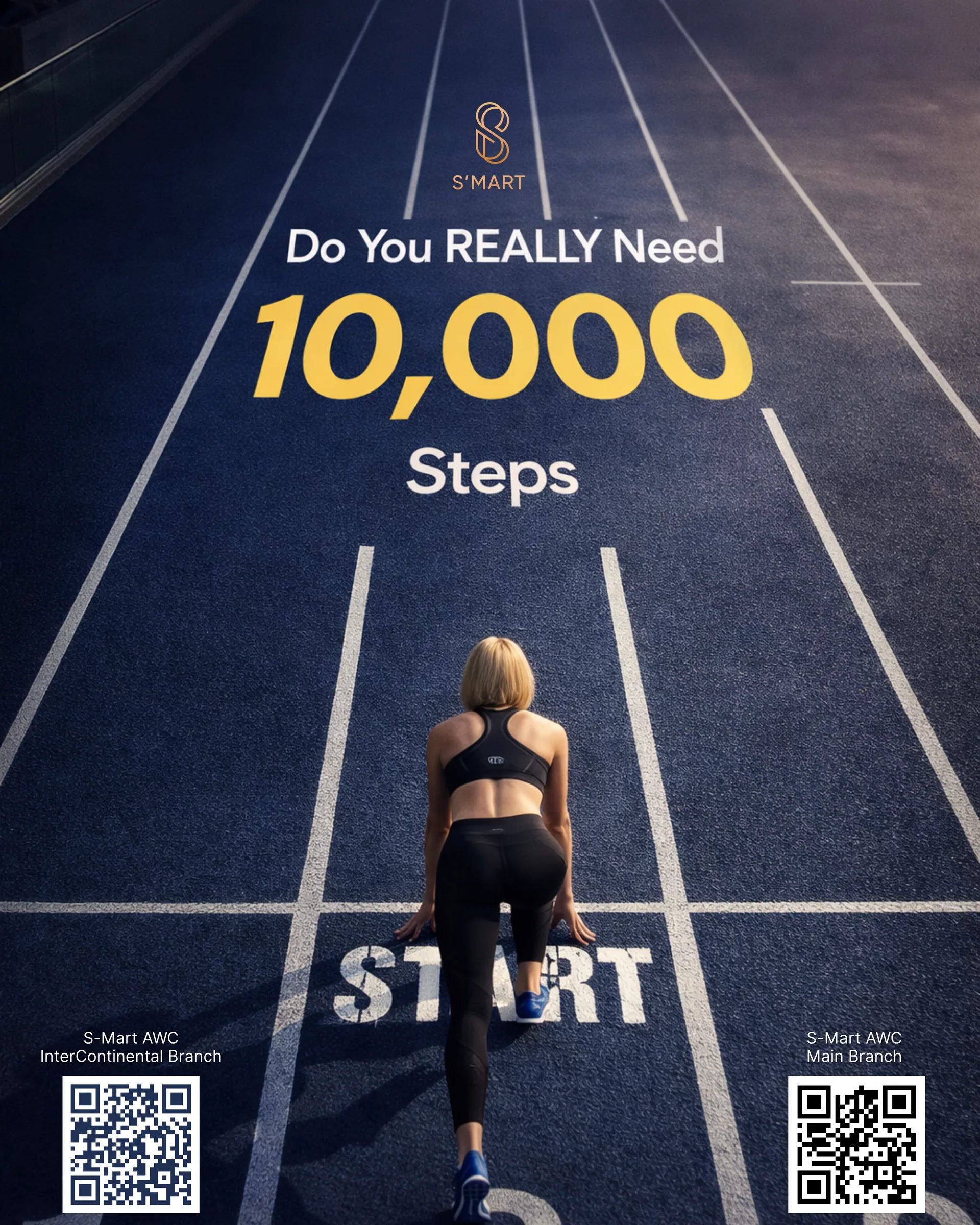
Do You Really Need 10,000 Steps?
You do not need to reach 10,000 steps from day one. A 2025 umbrella review suggests that starting with around 3,000 steps a day may already help reduce mortality risk. Adding just 1,000 extra steps per day may lower the risk of death from all causes by up to 15%.
Do You Really Need 10,000 Steps? The Real “Magic Number” for Longevity
We often hear the advice that we “must walk 10,000 steps a day” to stay healthy. But for many people, this number can feel too difficult to achieve, which may lead to discouragement. A 2025 umbrella review, which is a broad review of existing research, has revealed an encouraging new truth: you do not need to walk 10,000 steps for your body to start becoming healthier and for your lifespan to improve.
1. Forget the Old Belief: Starting at 3,000 Steps Can Already Help Protect Your Life
The belief that “only 10,000 steps count” may be misleading. Research confirms that the protective minimum threshold is only around 3,000 steps per day.
- The study indicates that walking just 3,143 steps per day may already be enough to start reducing the risk of death from all causes.
- For beginners, setting small and realistic goals is more important than forcing yourself to reach 10,000 steps immediately.
2. The Simple Formula: Add 1,000 Steps a Day and Reduce Mortality Risk by 15%
Once you have reached the minimum threshold, even a small increase in daily movement can make a significant difference. Data analysed from more than 200,000 participants found that:
- Adding 1,000 steps per day may reduce the risk of death from all causes by up to 15%.
- Adding 500 steps per day may reduce the risk of death from cardiovascular disease (CVD) by 7%.
3. How Many Steps Are Best? The Sweet Spot
Although even a smaller number of steps can be beneficial, if you want to achieve optimal benefits, the research recommends the following daily step ranges:
- Best range: Walking 8,000–10,000 steps per day provides the most significant results in reducing mortality rates.
- Point of maximum value: Mortality risk appears to reach its lowest point at around 9,000–10,500 steps per day. After that, additional benefits may begin to plateau.
4. How Many Steps Should Older Adults Walk?
For older adults aged 60 and above, the target number differs from that of younger adults. The research found that:
- Older adults gain the greatest benefits for disease prevention and mortality reduction at around 6,000–8,000 steps per day.
- Regular walking helps lower the risk of heart disease, diabetes, dementia, and can help prevent sarcopenia, or age-related muscle loss, in later life.
5. Not Just a Longer Life, But a Leaner Body Too
Walking does not only support longevity. It can also benefit body shape and blood markers.
- Reduces belly fat and body weight: An intervention that encouraged people to increase their walking by 500 steps per day until reaching a target of 7,000 steps over 12 weeks found clear reductions in body weight and waist circumference.
- Lowers “bad” cholesterol: People who walked more than 10,000 steps per day tended to have a lower body mass index (BMI) and better LDL cholesterol levels than those who walked less.
Conclusion
Walking is one of the simplest and most affordable forms of health medicine. The 2025 research confirms that “the more you walk, the more you may reduce disease risk”. However, you do not need to pressure yourself to reach 10,000 steps from the very first day. Simply start with 3,000–4,000 steps and gradually increase your daily movement. By doing so, you are already building a protective shield against heart disease, cancer, and obesity.
References
Jurczak, D., Kafara, Z., Görner, K., & Makuch, R. (2025). The relationship between daily step count and all-cause mortality – Umbrella review. Journal of Kinesiology and Exercise Sciences, 111(35), 47–57. https://doi.org/10.5604/01.3001.0055.1586
Related articles
Related articles


S-MART AWC · 01
Headquarters (Prasert Manukitch)
Address S-Mart AWC Building, 35/2 Soi Prasert Manukitch 29 (Maylab), Prasert Manukitch Road, Chorakhe Bua, Lat Phrao, Bangkok 10230
S-MART AWC · 02
Inter Branch (Phloen Chit–Chidlom)
Address Room G102, Ground Floor, President Tower Shopping Center (connected to Inter Bangkok), 973 Phloen Chit Road, Lumphini, Pathum Wan, Bangkok 10330