
Longevity & Health Insight · 28 Jun 2026
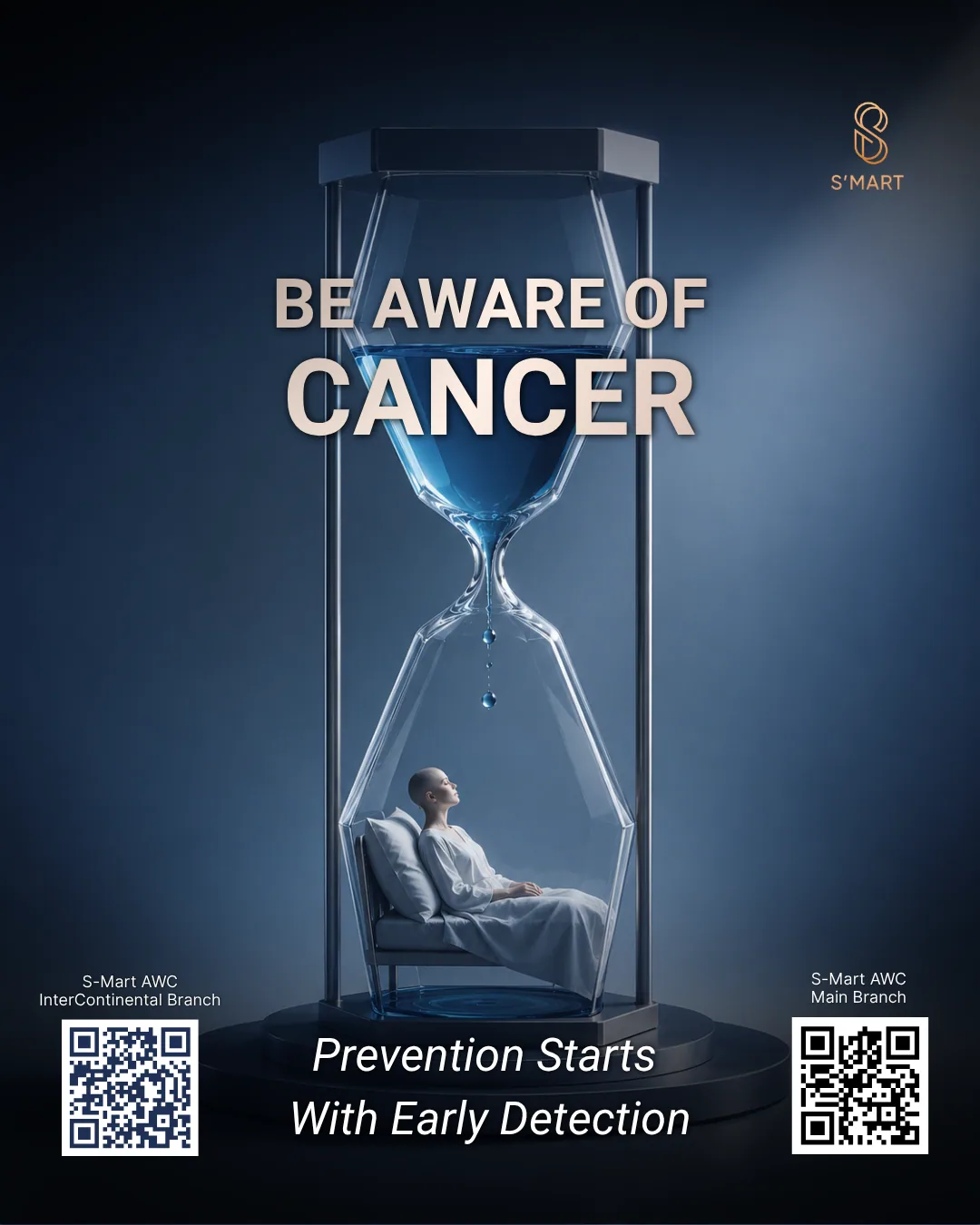
Be Aware of Cancer… Prevention Starts With Early Detection
Cancer screening is the process of checking for abnormal cells or early signs of cancer before symptoms appear. Detecting cancer at an early stage may improve treatment outcomes, reduce the intensity of treatment, and support better health planning. It is especially important for people aged 35–40 and above, or those with risk factors, to undergo regular screening.
Who Should Undergo Cancer Screening?
Cancer is often described as one of the most frightening silent threats because, in its early stages, it often shows no obvious symptoms. By the time a patient notices something unusual and visits a doctor, the disease may already have progressed to a stage where treatment becomes more difficult.
In reality, however, if cancer can be detected at an early stage, the chances of successful treatment can be much higher. This is why cancer screening is considered one of the most worthwhile investments in long-term health.
What Is Cancer Screening?
In simple terms, cancer screening is a test used to look for disease or abnormal cells while a person still feels healthy and has no signs of illness.
Many people confuse screening with diagnostic testing, but the two are very different.
- General diagnostic testing: This is usually done when a person already has symptoms, such as feeling a lump, having a persistent cough, or experiencing ongoing abdominal pain, in order to find out what condition may be causing the symptoms.
- Cancer screening: This is used to detect disease early, while the body still appears normal. It aims to identify abnormal tissue or pre-cancerous cells before they develop into cancer. It is like stopping a fire before it spreads.
Why Should Cancer Screening Not Be Overlooked?
The main goal of screening is to detect cell abnormalities before symptoms appear. Its key advantages include:
- Higher chance of successful treatment: Many types of cancer, when found at stage 1 or 2, may have a treatment success rate of more than 90%.
- Less intensive treatment: Early detection may reduce the need for more aggressive treatments such as chemotherapy or major surgery, as treatment can often be simpler when the disease is found early.
- Lower long-term costs: Prevention and early-stage treatment are usually far less costly than treating advanced cancer.
Checklist: Who Is Considered at Higher Risk and Should Be Screened?
If you have any of the following behaviours or risk factors, regular annual screening may be recommended:
- People aged 35–40 and above, both men and women
- People with a first-degree family history of cancer
- People who smoke heavily or drink alcohol regularly
- People with chronic stress, insufficient rest, or frequent consumption of grilled, charred, or processed foods
- People who are overweight or have obesity
Recommended Cancer Screening Programme
If you are looking for a reliable and accurate screening service designed to detect risks of common cancers, especially those frequently found among Thai people, there are programmes available for both men and women.
Do not wait until symptoms appear. Start taking care of yourself today, because good health is one of life’s most valuable assets. Give yourself and your loved ones peace of mind with an accurate, standardised cancer screening programme.
Related articles
Related articles


S-MART AWC · 01
Headquarters (Prasert Manukitch)
Address S-Mart AWC Building, 35/2 Soi Prasert Manukitch 29 (Maylab), Prasert Manukitch Road, Chorakhe Bua, Lat Phrao, Bangkok 10230
S-MART AWC · 02
Inter Branch (Phloen Chit–Chidlom)
Address Room G102, Ground Floor, President Tower Shopping Center (connected to Inter Bangkok), 973 Phloen Chit Road, Lumphini, Pathum Wan, Bangkok 10330