

Longevity & Health Insight · 9 Oct 2026
A Healthy Weight Does Not Always Mean Good Health
Body weight and BMI may not fully reflect metabolic health. Body composition, especially skeletal muscle mass and visceral fat, plays an important role in metabolism. People with normal weight may still have metabolic risk if they have high visceral fat and low muscle mass, while some people with higher body weight may maintain good metabolic health if they have sufficient muscle mass and appropriate visceral fat levels.
Why Muscle and Visceral Fat May Matter More Than the Number on the Scale
Many people use the number on the scale and Body Mass Index (BMI) as indicators of health. But have you ever noticed that some people who appear slim or have a normal weight may still experience metabolic health concerns, while others who look fuller or are overweight may have normal health check-up results and appear physically well?
The key may not lie in total body weight alone, but in body composition, especially the balance between muscle and fat.
Understanding “Skinny Fat” and “Fit but Overweight”
Using BMI alone has limitations because it cannot distinguish whether weight loss or weight gain comes from fat or muscle mass.
This can lead to groups of people whose body shape and metabolic health do not match what we might expect.
- Metabolically Unhealthy Non-Obesity (MUNO)
MUNO, often referred to as “Skinny Fat”, describes people who have a normal body weight but may have metabolic abnormalities, such as insulin resistance or abnormal blood lipid levels.
- Metabolically Healthy Obesity (MHO)
MHO refers to people whose body weight falls within the obesity range, but who do not show the metabolic abnormalities commonly associated with obesity.
The Hidden Ratio: When Muscle Competes With Visceral Fat
One factor that may help explain this difference is the Skeletal Muscle Mass to Visceral Fat Area Ratio (SVR).
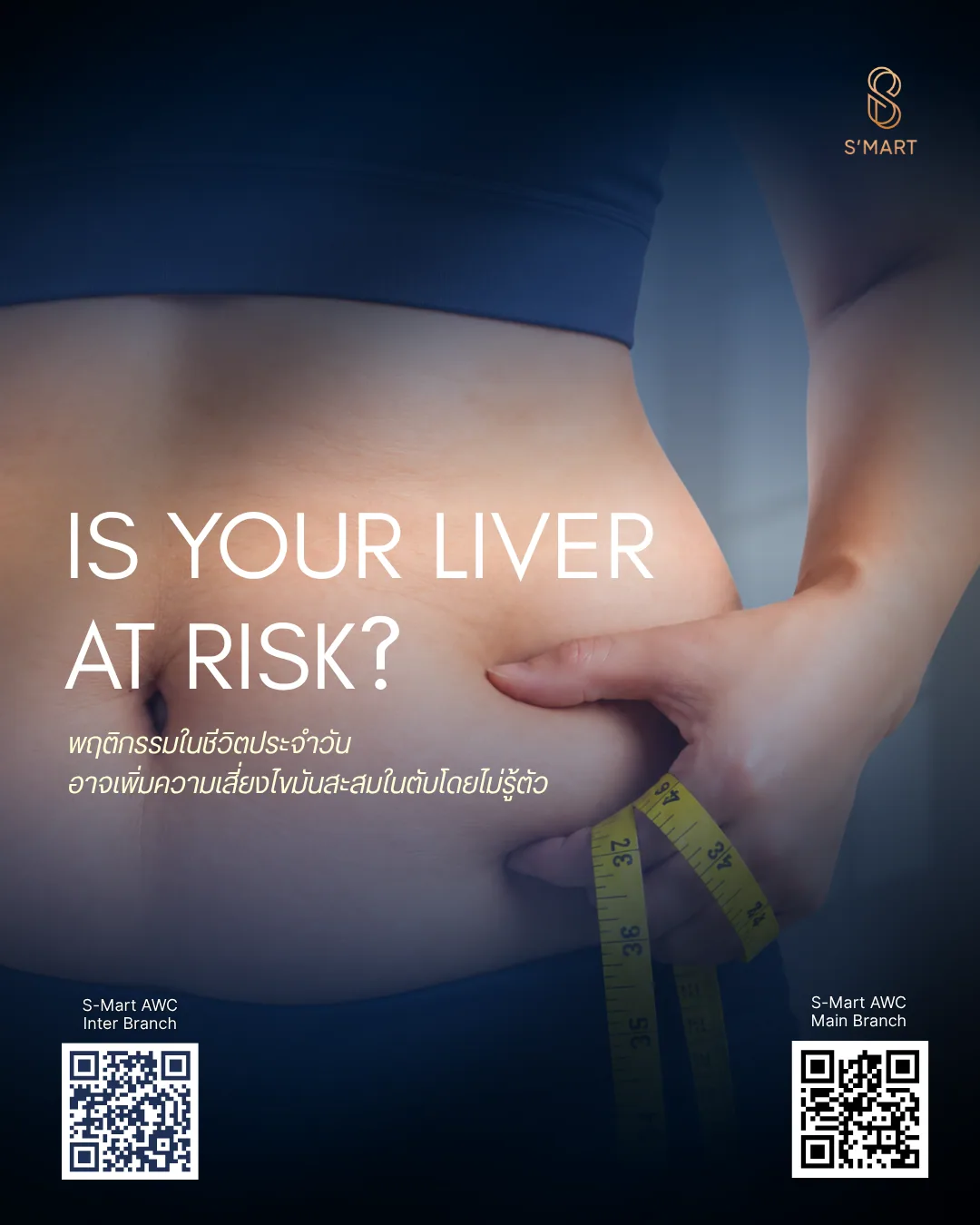
Visceral fat is considered a more concerning type of fat because it surrounds internal organs and directly affects metabolic function. It is also associated with insulin resistance.
In contrast, skeletal muscle acts like an effective energy-burning tissue. It helps support glucose uptake and insulin sensitivity.
An analysis of health data in adults found that people with higher muscle mass and lower visceral fat, or a higher SVR, were more likely to be classified as Metabolically Healthy Obesity (MHO).
At the same time, people with lower muscle mass but higher visceral fat, or a lower SVR, were clearly associated with Metabolically Unhealthy Non-Obesity (MUNO), especially among men and middle-aged adults aged 45–59 years.
How Can You Support Balanced Metabolic Health?
Based on these findings, health care should not focus only on reducing the number on the scale.
Improper weight loss methods, such as extreme dieting, may also reduce important muscle mass. What matters more is improving lifestyle habits to support a healthier body composition.
- Build and Maintain Muscle Mass
Resistance exercise, such as Strength Training or Weight Training, may help maintain muscle mass, which supports energy metabolism.
- Reduce Visceral Fat
Regular cardio exercise, together with limiting foods and drinks that may contribute to visceral fat accumulation, such as sugar, alcohol, and trans fats, may help support healthier fat distribution.
- Pay Attention to Overall Lifestyle Habits
Getting enough rest and managing stress are also important factors that support hormone function. These habits may help reduce abdominal fat accumulation as part of a broader health care plan.
Ultimately, good health is not measured only by clothing size or the number on the scale.
It is about balance from within. Having strong muscle mass and maintaining visceral fat within an appropriate range may be one of the key factors that helps support long-term metabolic health.
Reference
Wang, R., Cao, L., Zhang, P., Chen, H., Zhong, Q., Sang, Z., Wu, C., & He, Z. (2025). Association of the skeletal muscle mass to visceral fat area ratio with metabolically healthy obesity and metabolically unhealthy non-obesity: a cross-sectional study based on NHANES 2011–2018. Lipids in Health and Disease, 24(1), Article 334. https://doi.org/10.1186/s12944-025-02744-x
Related articles
Related articles

S-MART AWC · 01
Headquarters (Prasert Manukitch)
Address S-Mart AWC Building, 35/2 Soi Prasert Manukitch 29 (Maylab), Prasert Manukitch Road, Chorakhe Bua, Lat Phrao, Bangkok 10230
S-MART AWC · 02
Inter Branch (Phloen Chit–Chidlom)
Address Room G102, Ground Floor, President Tower Shopping Center (connected to Inter Bangkok), 973 Phloen Chit Road, Lumphini, Pathum Wan, Bangkok 10330